




Last updated: July 7, 2026
How to Integrate Digital Marketing & Web Development for Better Results
In today’s competitive digital landscape, siloed teams produce mediocre results. Your website is more than a digital brochure—it’s your most powerful marketing asset. The alignment of digital marketing and web development integration determines whether your online presence converts visitors into customers or simply attracts traffic that bounces away. When marketing strategy and web design work in harmony, businesses see measurable improvements in conversion rates, user engagement, and overall ROI. This guide reveals how to break down departmental barriers and create a unified approach that drives real business growth.
The problem is clear: many organizations treat web development and digital marketing as separate functions. Developers build features without considering user journey optimization. Marketers create campaigns without understanding technical constraints. The result? Websites that look impressive but underperform where it matters most—the bottom line. By implementing a strategic approach to marketing and web development collaboration, you’ll unlock exponential improvements in campaign effectiveness and customer acquisition costs.
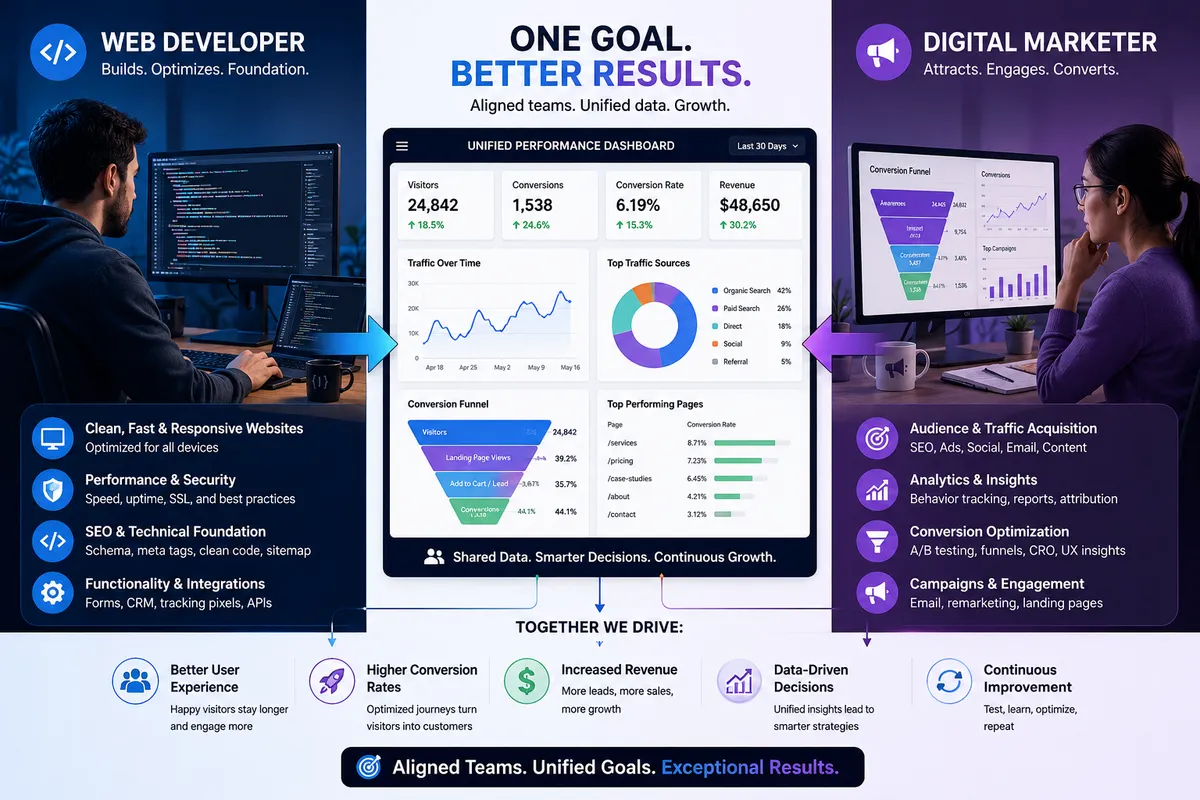
Why Digital Marketing and Web Development Must Work Together
The intersection of digital marketing and web development integration represents one of the highest-leverage opportunities in modern business strategy. According to HubSpot’s research on marketing effectiveness, companies that align their marketing and development teams report 36% higher customer retention rates. This isn’t coincidental—it’s the natural result of designing systems that work in tandem.
Your website serves multiple simultaneous purposes: it’s a lead generation tool, a customer service platform, a brand ambassador, and a revenue generator. Without integrated planning between marketers and developers, these functions conflict with each other. A developer might prioritize code efficiency over page load speed—which directly impacts Google rankings and user experience. A marketer might request elaborate animation features that increase bounce rates on mobile devices.
The Business Case for Integration
When marketing-driven web development principles guide your technical roadmap, measurable outcomes improve dramatically:
- Conversion rates increase through conversion-focused website design that guides users toward desired actions
- Customer acquisition costs decrease when site architecture supports efficient paid marketing campaigns
- Search engine visibility improves when developers implement SEO best practices from project inception
- User satisfaction rises when design decisions account for customer journey mapping and behavioral psychology
The strategic foundation is simple: every design decision and technical implementation should serve your marketing objectives. This philosophy transforms web development from a cost center into a profit center.
Key Components of Successful Web Design and Marketing Strategy Alignment
Effective digital marketing and web development integration requires deliberate structural changes and process improvements. Here are the core components that distinguish high-performing integrated teams from those operating independently.
Unified Goal Setting and KPI Alignment
Before any code is written or campaign is launched, marketing and development leaders must establish shared success metrics. Rather than developers measuring code quality and marketers measuring lead volume, both teams should focus on outcomes that matter to the business: customer lifetime value, conversion rate improvement, and revenue attribution.
Create a shared dashboard that both teams monitor weekly. This transparency naturally encourages collaboration because everyone sees how their work impacts shared objectives. Statista reports that integrated marketing and development teams achieve 28% faster time-to-market for new features and campaigns—a direct result of this alignment.
User-Centric Development Process
Conversion-focused website design begins with deep understanding of your target audience. Marketers possess this knowledge through customer interviews, behavioral data, and market research. Developers must integrate these insights into their technical decisions.
Implement user research sessions where both teams participate. When developers understand the frustrations, motivations, and digital behaviors of your customers, they make technically sound decisions that also satisfy user needs. This approach has proven critical for businesses like Airbnb and Slack, which built platforms where technical architecture explicitly supports user experience and marketing effectiveness.
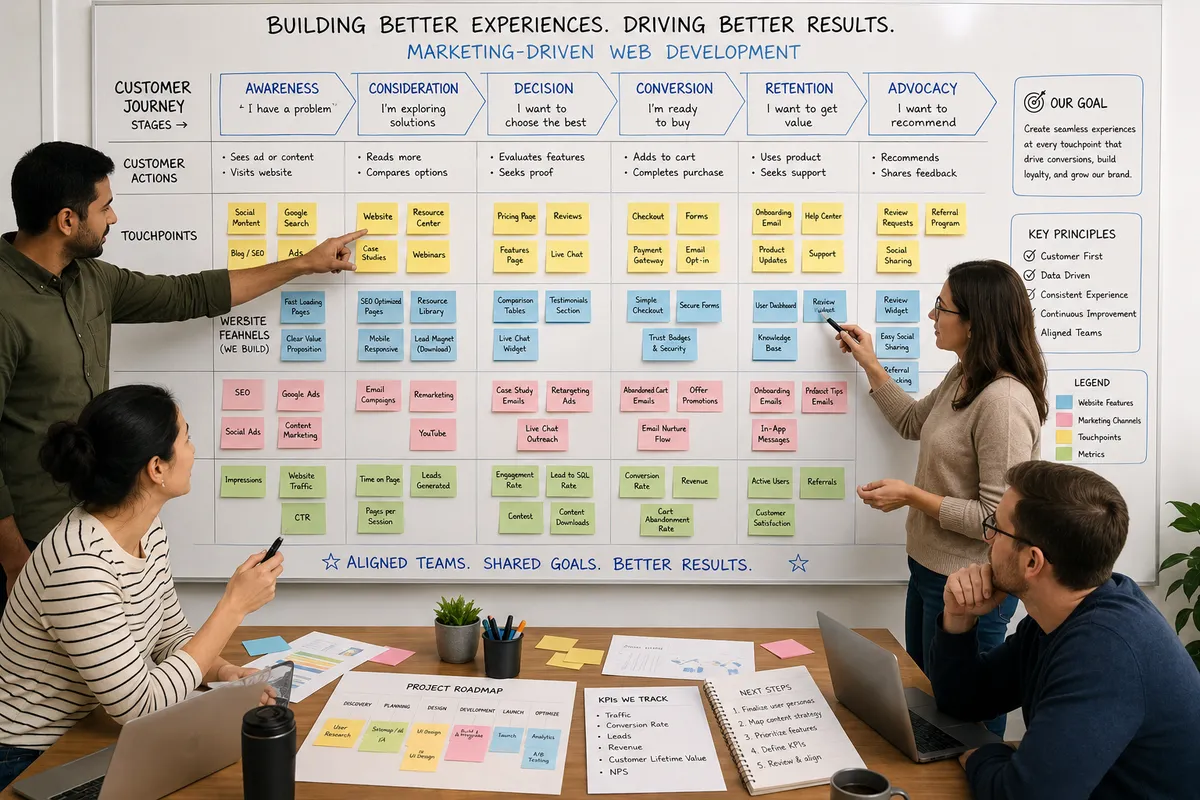
Practical Implementation Framework for Digital Marketing Web Development Integration
Moving from theory to execution requires a structured approach. Here’s how to implement integrated marketing and web development practices within your organization.
Phase 1: Audit Current State and Identify Gaps
Before transformation, understand where misalignment currently exists. Conduct a comprehensive review of:
- Website performance metrics versus marketing campaign objectives
- Technical debt items that impede marketing execution
- Communication breakdowns between teams
- Conflicting success metrics and incentive structures
This audit reveals quick wins—often low-hanging fruit that both teams can address immediately to demonstrate the value of integration. Quick wins build momentum and secure leadership buy-in for deeper changes.
Phase 2: Establish Cross-Functional Teams
The best integration happens through dedicated cross-functional squads. Rather than maintaining separate marketing and development departments, organize small teams around business objectives. A team responsible for user acquisition might include one marketer, two developers, one designer, and one data analyst—all focused on the same outcome.
This structure naturally eliminates the communication delays that plague siloed organizations. When your developer sits next to your paid search manager, decision-making accelerates and becomes more informed. Teams operating with this structure typically reduce campaign launch time by 40-50%.
Phase 3: Implement Agile Marketing and Development Methodologies
Waterfall approaches—where marketing creates a campaign and then hands it to development for implementation—guarantee delays and miscommunication. Modern digital marketing and web development integration requires agile methodologies that emphasize rapid iteration, feedback loops, and continuous improvement.
Two-week sprints work well for most organizations. Each sprint includes planning sessions where marketing objectives and technical constraints are discussed together, execution where both teams work in parallel, and review sessions where results are analyzed for next sprint improvements.
Tools and Technology That Enable Integration
The right technology stack facilitates better collaboration. Modern marketing automation platforms, analytics tools, and development frameworks now support integrated workflows.
Marketing Technology Stack Considerations
Choose platforms that developers can integrate with existing systems. Modern solutions offer Google Analytics and similar tools with robust API documentation that allows developers to create custom dashboards, reporting systems, and automated optimization processes. When developers can see marketing data in real-time, they make better technical decisions that support campaign performance.
Similarly, your development platform should support marketing requirements. Content management systems should enable marketers to manage campaigns without constant developer support. A/B testing frameworks should be built into your website architecture from inception. This is the philosophy behind conversion-focused website design—technical choices made with marketing operations in mind.
Communication and Project Management Tools
Asana, Monday.com, Jira, and similar tools should reflect your integrated team structure. Rather than separate projects for marketing and development, create unified projects where both teams contribute, comment, and track dependencies. This transparency eliminates surprises and keeps everyone informed of progress toward shared goals.
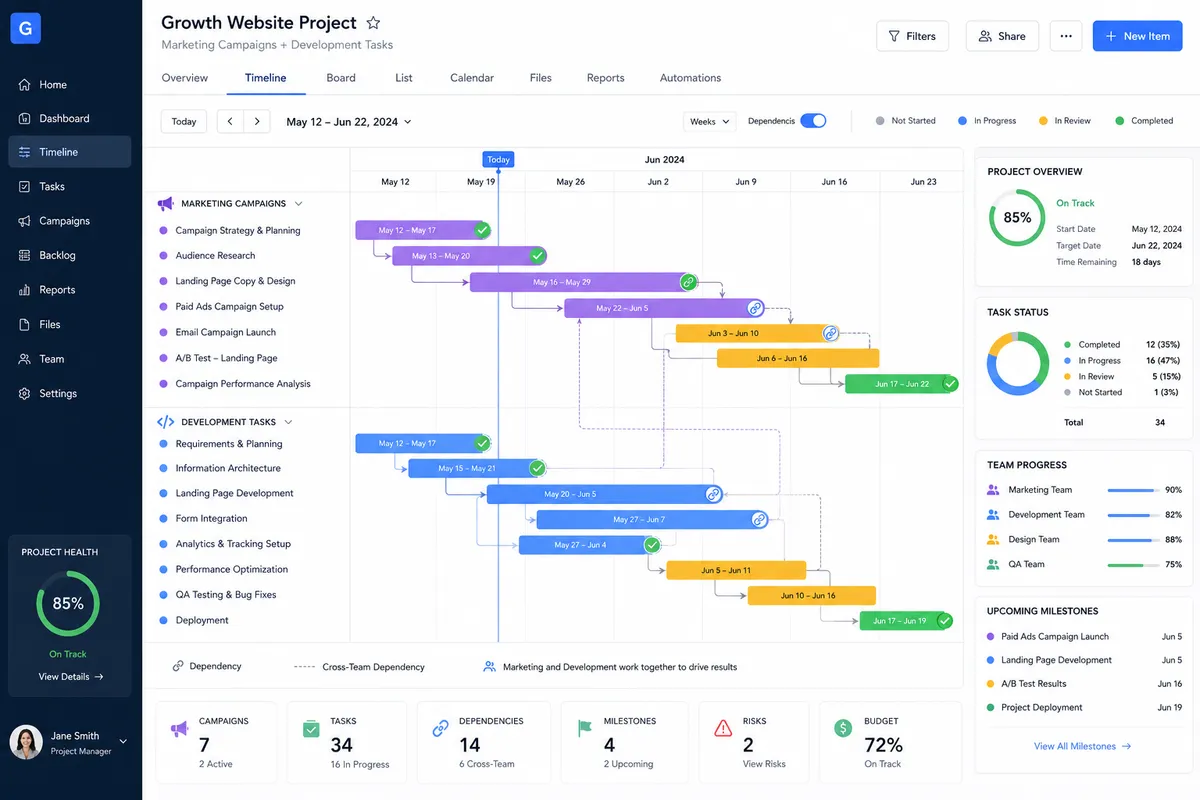
Real-World Example: E-Commerce Integration Success
Consider how an e-commerce company transformed through digital marketing and web development integration. Their situation was typical: the marketing team launched seasonal campaigns that the development team struggled to support, conversion rates plateaued despite increasing ad spend, and internal tension grew between departments.
Their solution involved reorganizing into squads focused on customer acquisition, retention, and reactivation. The acquisition squad included a paid search specialist, two developers, and a data analyst. This squad owned website performance for acquisition campaigns end-to-end. Within two months, they reduced mobile load time by 40%, implemented advanced user segmentation that improved ad targeting, and increased conversion rates by 23%.
The key insight: neither team made these improvements alone. The marketer’s knowledge of audience behavior informed technical priorities. The developers’ understanding of technical constraints shaped campaign strategy. This collaborative intelligence produced results neither team could achieve independently.
Measuring Success: KPIs for Integrated Performance
How do you measure the impact of digital marketing and web development integration? Track these key performance indicators:
- Conversion Rate: The fundamental metric showing how effectively your integrated approach turns visitors into customers
- Customer Acquisition Cost: How efficiently your combined efforts attract new customers
- Time-to-Market: How quickly you can launch new features and campaigns
- Internal NPS: Measure satisfaction between marketing and development teams to ensure the integration is working culturally
- Technical Debt Velocity: Track how quickly you’re eliminating constraints that impede marketing execution
These metrics should be reviewed in monthly cross-functional meetings where both teams celebrate wins and problem-solve challenges together. This rhythm reinforces the collaborative mindset essential for sustained integration.
Overcoming Common Implementation Challenges
Digital marketing and web development integration faces predictable obstacles. Anticipating these challenges helps you navigate them successfully.
Cultural Resistance
Team members accustomed to working independently often resist collaborative structures. Address this through clear communication about the business case, visible quick wins, and recognition of team members who exemplify collaborative behavior. Leadership must model the integration they expect from teams.
Conflicting Priorities
Even integrated teams sometimes face genuine trade-offs between technical perfection and marketing speed. Establish clear decision-making frameworks in advance: when speed wins, when quality wins, and how to negotiate middle ground. Transparent decision-making processes reduce friction and build trust.
Skill Gaps
Most developers lack marketing knowledge, and most marketers lack technical literacy. Invest in training for both teams. Developers benefit from understanding customer acquisition, conversion psychology, and marketing metrics. Marketers benefit from understanding technical constraints, web development timelines, and system architecture implications. This mutual education is foundational to genuine integration.
The Future of Integrated Marketing and Web Development
The trend is unmistakable: marketing and development integration is becoming the competitive standard, not a differentiator. As artificial intelligence, machine learning, and advanced analytics become standard business tools, the need for marketing-development collaboration intensifies. Complex problems like personalization at scale, predictive analytics, and dynamic content optimization require both skillsets working together.
Organizations that master this integration today will be positioned as leaders in their industries. Those that maintain siloed structures will find themselves at a competitive disadvantage, unable to respond quickly to market changes or leverage their technology investments effectively.
Conclusion: Transform Your Results Through Integration
The strategic integration of digital marketing and web development is no longer optional—it’s essential for competitive survival. When your teams work in harmony, guided by shared goals and unified metrics, you unlock performance levels that siloed teams cannot achieve. Conversion-focused website design emerges naturally from collaboration. Marketing-driven web development becomes your operational standard. Your website transforms from a cost center into your most effective customer acquisition and retention tool.
The path forward is clear: break down silos, establish shared goals, implement integrated processes, and invest in team development. The results—improved conversion rates, lower customer acquisition costs, faster innovation cycles, and stronger team cohesion—will justify the effort many times over. Your competitors are still operating in silos. Today is the time to gain the advantage of truly integrated digital marketing and web development. Contact Particular Angles today to assess your current integration level and develop a roadmap for transformation.
Author bio placeholder — add your credentials and experience here to strengthen E-E-A-T signals. Include professional background, years of experience in digital marketing and web development, relevant certifications, and notable client successes that demonstrate expertise in integrated marketing and development strategy.