




Last updated: October 16, 2026
Cost of Custom Web Design for Small Businesses: Budget Guide
Custom web design costs can range from a few thousand dollars to tens of thousands of dollars, depending on the website’s size, functionality, design requirements, and level of customization.
Understanding these costs and estimating your potential return on investment (ROI) can help you make an informed decision before committing your budget. This guide explains website pricing, common cost factors, and how to evaluate whether custom web design fits your business goals.
Whether you’re launching your first website or redesigning an existing one, knowing the web design pricing breakdown helps you make confident investment decisions aligned with your business goals.

Understanding the Cost of Custom Web Design for Small Businesses
The cost of custom web design for small businesses isn’t fixed. It depends on the project’s scope, complexity, and the expertise of the designer or agency you choose. Template-based website costs vary by platform, subscription plan, hosting, domain renewals, and paid features. Check current provider pricing and include ongoing expenses in your budget.
A professionally designed website can help small businesses build trust, communicate their value clearly, and guide visitors toward taking action. Actual conversion rates depend on factors such as website usability, traffic quality, pricing, and the strength of the offer.
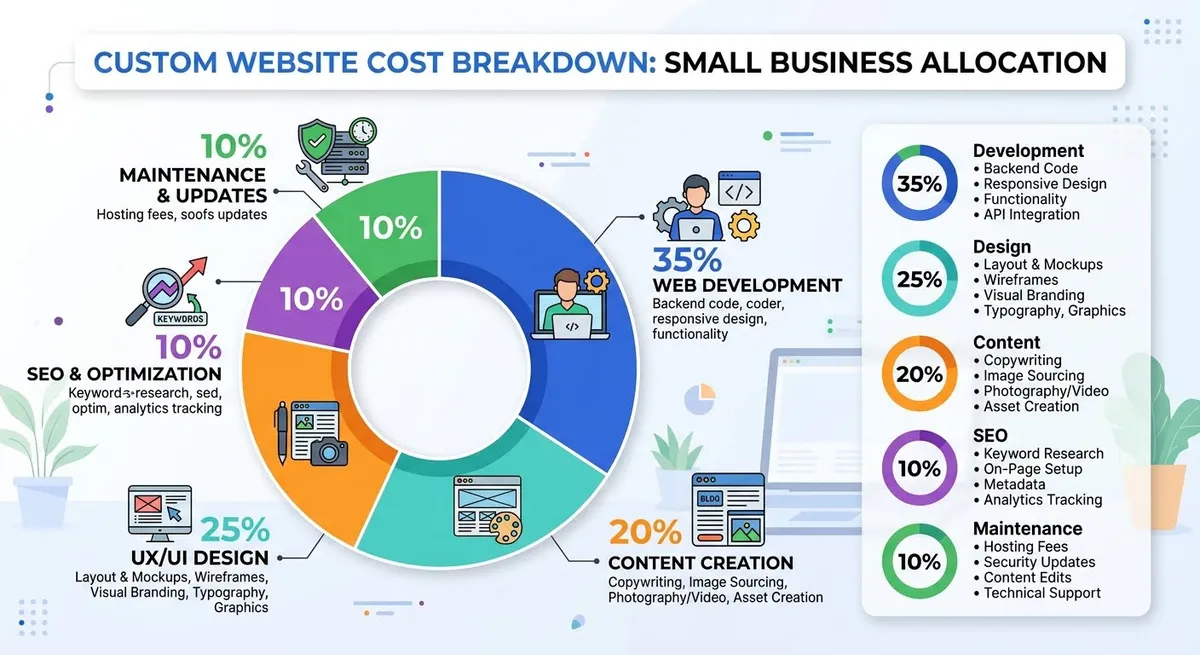
The key breakdown categories include design, development, content creation, SEO optimization, and ongoing maintenance. Each layer contributes to your final investment and long-term website performance.
Web Design Pricing Small Business Owners Should Know
Understanding web design pricing for small business projects helps owners compare quotes, evaluate services, and plan a realistic website budget.
Design and Strategy
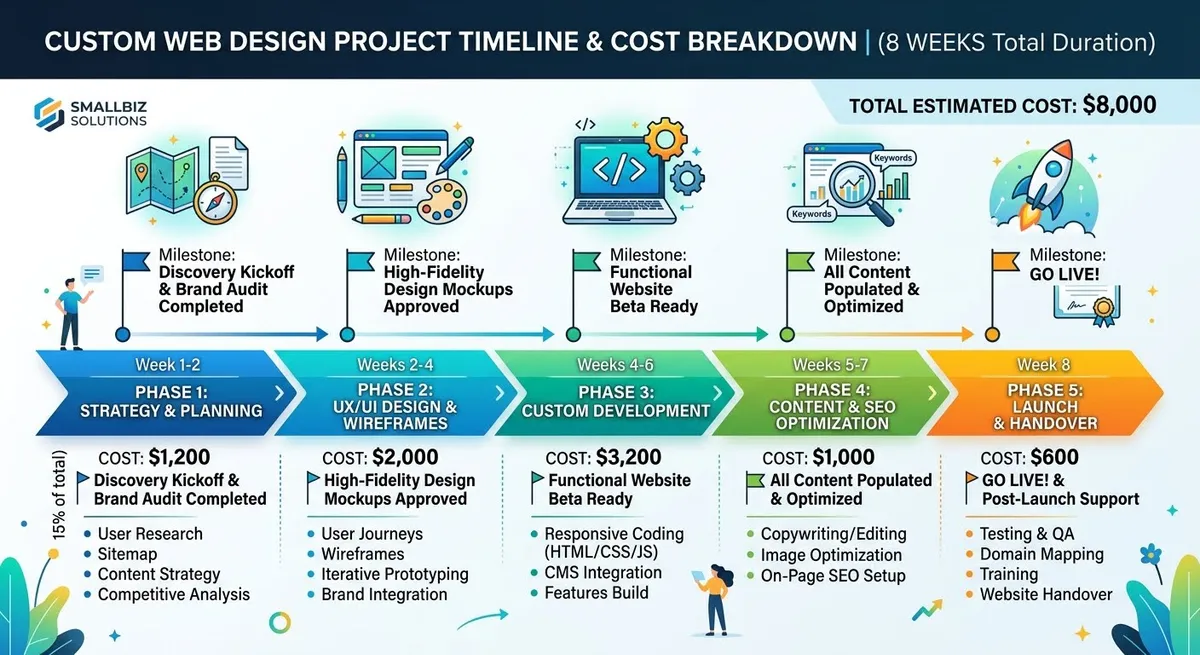
This phase includes discovery calls, competitor research, wireframing, user experience planning, and visual design mockups. Design research time varies depending on the project’s complexity, target audience, research requirements, and scope. Ask your designer to explain the research and planning included in the quote.
Development and Technical Build
Custom development transforms design mockups into a functional, responsive website. This includes coding for desktop and mobile responsiveness, integrating backend systems, database setup, and security implementation.
Development costs depend on the number of pages, custom functionality, e-commerce requirements, integrations, and testing needs. Ask providers to separate development fees from design, content, and ongoing maintenance costs.
Custom web design vs templates comparison reveals that custom development provides superior scalability and flexibility especially as your business grows.
Content Creation and Copywriting
Professional website copy, product descriptions, service pages, and SEO-optimized content require experienced copywriters. Quality content directly influences search rankings and user trust.
Content strategy and creation costs depend on the number of pages, research requirements, copy length, and level of editing. Request a quote that clearly defines the deliverables and revisions included. Many small business owners underestimate this cost, then struggle with vague messaging that fails to convert visitors into customers.
Custom Website Cost Breakdown: SEO Optimization and Technical Setup
Technical SEO ensures your site is discoverable by search engines. This includes site architecture optimization, schema markup implementation, page speed optimization, and initial keyword research.
Initial SEO setup costs depend on the website’s size, technical requirements, keyword research, content needs, and scope of optimization. Ask for an itemized quote and clarify which services are included. This investment pays dividends through organic traffic growth over months and years. SEO services for small businesses provide a complete roadmap to sustainable organic growth beyond launch day.
Affordable Web Design Services: Pricing Models Explained
Fixed Project Pricing
A designer or agency agrees on a set price for the defined project scope. This approach can make budgeting easier when deliverables, revision limits, payment milestones, and exclusions are clearly documented.
Hourly Rate Pricing
Designers charge for the time spent on the project. The final cost depends on the provider’s rate, project complexity, and hours required. Ask for an estimated number of hours and approval before work exceeds the agreed budget.
Value-Based Pricing
Some agencies set fees according to the project’s business objectives and expected value. Pricing depends on the scope, required functionality, and services included. Ask the provider to explain how the fee is calculated and which deliverables are covered.
For most small businesses, the right pricing model depends on the project scope, budget, and need for flexibility. When comparing web design quotes, ask each provider to itemize design, development, content creation, SEO setup, and ongoing maintenance costs. Confirm the payment schedule, revision limits, project timeline, and any additional fees before signing an agreement. This makes it easier to compare proposals and choose a solution that fits your budget.
Factors That Impact Custom Web Design Cost
Several factors dramatically influence your final investment in custom web design pricing for small business projects.
- Geographic Location: Web design pricing may vary by location because of differences in labor costs, market demand, agency overhead, and project scope. Compare itemized quotes rather than relying on a fixed geographic percentage.
- Designer or Agency Experience: Award-winning agencies with published portfolios command premium rates. Freelancers and established agencies may quote different prices based on experience, project scope, overhead, and included services. Compare portfolios and deliverables rather than assuming one provider type is always cheaper.
- Website Complexity: A simple 5-page brochure site costs far less than a multi-language site with e-commerce, membership systems, or custom APIs.
- E-commerce Functionality: Adding a shopping cart, payment processing, inventory management, and product pages can increase project costs. Request an itemized quote based on your store’s features and requirements.
- Timeline and Rush Fees: Rush projects may cost more when they require additional staff, overtime, or schedule changes. Ask the provider to confirm any rush fees before work begins.
- Post-Launch Support: Ongoing costs may include maintenance, hosting, backups, security updates, and technical support. Monthly fees depend on the services included, the complexity of the website, and how often updates are needed. Request a breakdown of recurring charges.
Website ROI: Does Custom Web Design Pay for Itself?
How to Calculate Website ROI
Use this formula to estimate the return on your website investment:
Website ROI (%) = [(Revenue Attributable to the Website − Total Website Investment) ÷ Total Website Investment] × 100
For example, if your website generates $12,000 in attributable revenue and your total website investment is $8,000, the revenue-based return is 50%. This simplified calculation does not account for other business expenses, so profit-based ROI may be lower.
Use actual analytics, qualified leads, closed sales, and project expenses to calculate your results. Revenue should only be attributed to the website when there is reasonable evidence connecting the website to the sale. The most important question isn’t just the upfront cost. It’s whether custom web design delivers a measurable financial return. Let’s run the numbers using realistic small business metrics.
Scenario: Service-Based Small Business
Imagine a digital marketing agency investing $8,000 in custom web design:
- Current website: 50 visitors/month (via word-of-mouth only), zero conversions from web
- New custom website launches with SEO optimization and improved conversion design
- Month 3 traffic: 250 visitors/month (350% increase)
- Assumed conversion rate: 3% for this illustrative scenario. Actual conversion rates vary by industry, traffic source, website usability, and the action being measured.
- New leads per month: 7.5 leads
- Close rate: 40% (2–3 clients per month)
- Average project value: $2,500
- Monthly new revenue: $5,000–$7,500
These figures illustrate the potential value of a well-performing website, but actual results vary based on traffic, lead quality, conversion rates, project costs, and operating expenses. Track the revenue and profit attributable to the website over time to determine your actual return on investment.
How small business website design impacts revenue provides detailed data on conversion rate improvements across industries and specific design patterns that drive results.
Budget-Friendly Custom Web Design Options for Small Businesses
If your current budget is tight, several strategies reduce upfront cost without sacrificing quality or custom design benefits:
Phase Your Launch
Launch with essential pages such as Home, About, Services, and Contact. Add advanced features such as a blog, e-commerce, or integrations in a later phase when your budget and business needs allow. This spreads investment over time while you validate market response.
Choose Modern No-Code Platforms
Platforms like Webflow offer design flexibility and can reduce development work for some projects, depending on the design requirements, integrations, subscriptions, and level of customization. Compare the total project cost and ongoing fees before choosing a platform.
Negotiate Value-Based Arrangements
Some designers accept performance-based pricing: lower upfront cost plus a small percentage of new revenue generated by the website. This aligns designer success with your business growth.
Invest in Essentials First
Prioritize strategic design, mobile responsiveness, and SEO optimization. Skip premium features (animations, video backgrounds) initially; add them later as budget allows.
Common Cost Mistakes Small Business Owners Make
Understanding what increases cost unexpectedly helps you avoid budget overruns:
- Unclear Requirements: Vague project scope forces designers to make assumptions, leading to revision cycles and additional costs.
- Changing Scope Mid-Project: Adding pages, features, or functionality after development begins can increase costs because of additional work and revisions. Agree on a written change-request process and confirm extra charges before approving changes.
- Skipping Discovery Phase: Skipping discovery and planning may lead to unclear requirements, repeated revisions, and additional costs. Define your goals and project scope before design begins.
- Neglecting Mobile Design: Treating mobile as an afterthought forces costly redesigns later. Mobile-first design can improve usability on smaller screens, but it does not automatically reduce project costs. Pricing depends on the design requirements, functionality, and development scope.
- Ignoring Ongoing Costs: Ongoing website costs may include hosting, domain renewals, backups, software updates, and security monitoring. Fees depend on the provider, service level, and website requirements. Request a breakdown of recurring charges before committing to a plan.
Comparing Custom Web Design vs. Premade Solutions
Is custom design worth the investment compared to templates? For most small businesses targeting serious growth, yes. Custom websites offer flexibility in design, functionality, and scalability. However, conversion rates, search performance, and maintenance requirements depend on the quality of implementation and ongoing management. A well-built template website may also perform effectively for a small business.
Over three years, total website costs depend on the initial build, hosting, domain renewals, premium themes or plugins, maintenance, updates, and future changes. Custom websites may provide greater flexibility, but they are not automatically more cost-effective than template-based sites. Compare itemized quotes and projected ongoing expenses before deciding.
How to Get Accurate Quotes for Your Custom Web Design Project
Before requesting quotes, prepare detailed project documentation to get accurate estimates:
- Written Project Brief: Include business goals, target audience, must-have features, and content requirements (number of pages, existing copy/images).
- Reference Sites: Share 3–5 websites you admire for design direction and functionality inspiration.
- Timeline Expectations: Clarify your desired launch date to identify any rush fee implications.
- Ongoing Needs: Specify whether you need post-launch support, maintenance, or monthly updates.
- Budget Range: Share your realistic budget so designers can scope accordingly rather than padding quotes.
Request quotes from at least three providers. Compare not just price but also deliverables, timeline, revision allowances, and post-launch support included. How to hire a web developer guide provides detailed evaluation criteria for assessing designer qualifications and fit.
Maximizing Your Custom Web Design Investment
Once your custom site launches, several strategies maximize ROI and extend the value of your investment:
- Implement Analytics Tracking: Set up Google Analytics 4 and conversion tracking to measure visitor behavior and revenue attribution.
- A/B Test Key Pages: Run experiments on landing pages, CTAs, and forms to incrementally improve conversion rates.
- Build an Email List: Capture visitor emails through website forms to build a direct marketing channel.
- Publish Regular Content: Maintain a blog with SEO-optimized articles to drive recurring organic traffic. Web design trends 2026 increasingly emphasize content-integrated design strategies.
- Integrate Digital Marketing: Align your website with paid advertising, email marketing, and social media efforts. Digital marketing and web design integration checklist outlines 10 steps to coordinate all channels.
- Monitor Performance Metrics: Review monthly traffic, conversion rates, and revenue attribution to identify optimization opportunities.
Conclusion: Making the Custom Web Design Investment Decision
A custom website may offer greater flexibility for a business’s branding, functionality, and conversion goals. However, conversion performance depends on implementation, content quality, user experience, and ongoing optimization. A custom website does not automatically outperform a well-built template site.
For many small businesses, a professionally designed website can be a valuable marketing investment when it supports clear business goals, attracts relevant visitors, and converts them into customers. Evaluate the expected return alongside upfront costs, ongoing expenses, and your overall marketing strategy.
Ready to improve your online presence? Contact Particular Angles to discuss your custom web design project, review your business goals, and request a personalized quote. Our team can help you explore website design options that fit your needs and budget.
This article was prepared by the Particular Angles team and covers custom web design costs, budgeting considerations, and strategies for evaluating website investments.