




Last updated: October 19, 2026
Digital Marketing Web Design Integration: 10-Step Checklist
When digital marketing and web design teams work in silos, businesses can lose potential conversions because the website experience and marketing message may not align. This disconnect can confuse visitors and reduce the effectiveness of marketing campaigns. Digital marketing web design integration helps teams work toward shared goals and create a more consistent user experience.
Step 1: Establish Unified Business Objectives and KPIs
Before marketing and design teams begin working together, establish shared business objectives that both departments can support. When teams align around common goals and performance indicators, they can coordinate their efforts more effectively and focus on measurable business outcomes.
Create a single document outlining your primary goals: revenue targets, lead generation numbers, customer acquisition costs, or brand awareness metrics. Ensure marketing and design leads understand not just the goals, but why they matter to the business. When both teams speak the same language around KPIs, they naturally make decisions that support the same outcomes.
Key Metrics to Define Together:
- Conversion rate targets for key pages
- Cost per acquisition (CPA) benchmarks
- Average order value (AOV) or deal size
- Customer lifetime value (CLV) estimates
- Page load time and Core Web Vitals targets
- Engagement metrics (bounce rate, time on page, scroll depth)
Document these metrics in a shared spreadsheet or dashboard accessible to both departments. Review them monthly to identify where collaboration is working and where friction persists.
Step 2: Map Your Customer Journey Collaboratively
Marketing and design teams often have different views of the customer journey. Web development and digital marketing alignment requires a unified understanding of how prospects move from awareness through conversion.
Conduct a joint workshop where marketers share what they know about customer pain points, decision criteria, and objections. Simultaneously, designers can identify friction points in the current user experience. This cross-functional conversation reveals opportunities for improvement that neither team would spot alone.
Map each stage of the customer journey and assign accountability: Which touchpoints belong to marketing? Which are design-dependent? Which require active collaboration? Document this in a visual flowchart that becomes your north star for all future discussions.
Journey Mapping Deliverables:
- Awareness stage: content and discovery strategy
- Consideration stage: comparison pages, case studies, testimonials
- Decision stage: conversion-optimized landing pages and checkout flow
- Post-purchase stage: onboarding and retention design
Step 3: Conduct a Website Audit for Better Marketing and Development Alignment
Most website audits are conducted by either marketing or design teams in isolation. For true marketing and development alignment, conduct a collaborative audit that examines both user experience and marketing effectiveness simultaneously.
Strong marketing and development alignment helps teams coordinate messaging, website functionality, and conversion goals throughout the customer journey.
Evaluate your current website through both lenses. Marketing audits typically focus on messaging clarity, call-to-action visibility, and conversion funnels. Design audits examine visual hierarchy, navigation structure, and aesthetic consistency. When both perspectives are combined, you get a complete picture of what’s working and what needs fixing.
Web design mistakes that kill SEO rankings often go unnoticed when teams don’t communicate. Poor heading structure, slow image optimization, or mobile navigation issues impact both user experience and search visibility, making them concerns for both departments.
Step 4: Develop Integrated Messaging and Brand Guidelines
Nothing undermines credibility faster than inconsistent messaging across your website. When marketing uses one brand voice and design implements another visual direction, customers notice the disconnect.
Create comprehensive brand guidelines that both teams contribute to and follow. This should include: tone of voice, visual identity, typography, color psychology applications, imagery style, and messaging frameworks. Marketing should articulate the brand story and value propositions; design should ensure they’re expressed visually with equal clarity and impact.
Review your messaging against your competitive positioning. Visual design helps shape visitors’ first impressions, while clear messaging communicates your value proposition and encourages visitors to take action. Both elements should work together to create a consistent and effective user experience.
Messaging Framework Components:
- Value proposition statement
- Three to five key benefit messages
- Customer pain point acknowledgments
- Social proof and trust signals
- Clear, specific calls-to-action
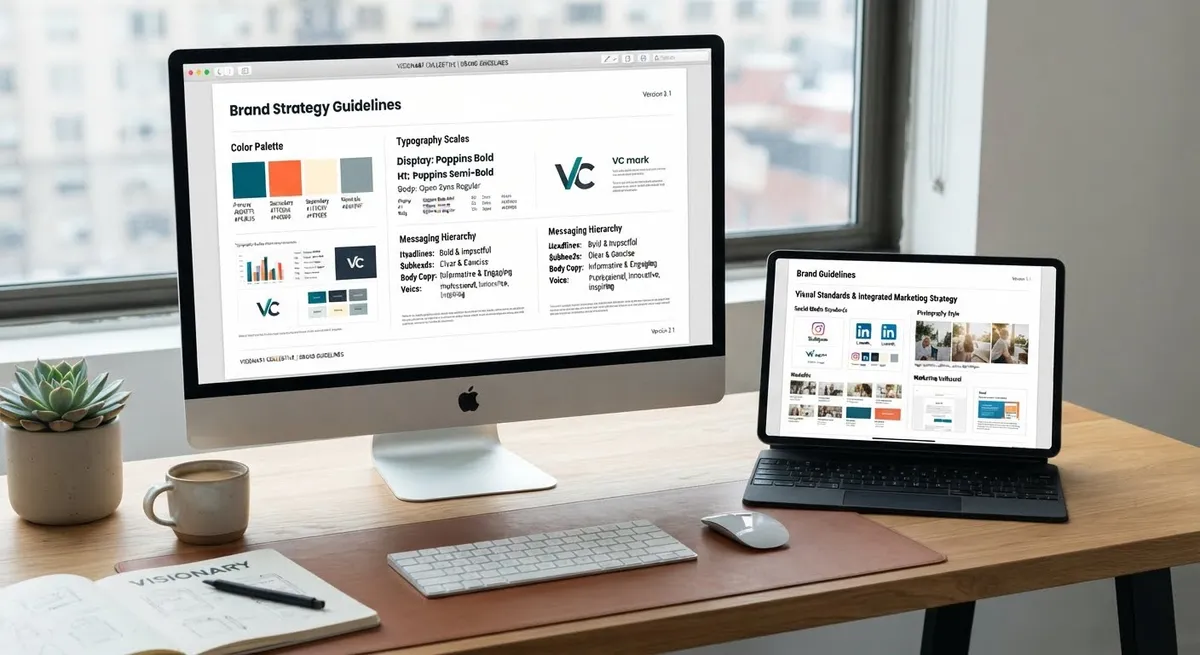
Step 5: Plan an Integrated Marketing Strategy Around User Intent and Design Capacity
Marketing teams often create content strategies without considering design and development resources available. Conversely, design teams may build features that don’t align with content marketing goals. An integrated marketing strategy plans both simultaneously.
Create a content calendar that accounts for design requirements. If you’re planning a product launch blog series, consider: Will this need custom graphics? Will it require a new landing page template? Does it support existing design systems or require new components? Involve design early so resource planning is realistic and timeline estimates are accurate.
Prioritize content initiatives based on both marketing impact and design feasibility. Some high-impact projects might require more design work than your team can handle in a given quarter. Planning together prevents overpromises and ensures marketing campaigns have the design support they need.
Step 6: Improve Website Design for Conversions Through Testing
The highest-performing teams test everything together. A/B testing isn’t just about button colors or copy variants. It’s about finding the intersection of compelling messaging and user-friendly design that converts best.
Establish a testing protocol where marketing proposes conversion hypotheses and design brings user experience expertise. Maybe your headline is compelling, but the form design is intimidating visitors. Maybe your visual design is beautiful, but your value proposition isn’t clear enough. Testing holistically reveals the real barriers to conversion.
Run experiments on your highest-traffic, highest-value pages first. Website design for conversions requires iterative refinement based on real user behavior, not assumptions. Document all experiments, winners, and learnings in a shared system accessible to both teams.
Experimentation Framework:
- Define hypothesis: What do we believe will improve conversions?
- Design variation: What’s the change in design, messaging, or both?
- Run test: Collect enough data to evaluate results reliably. The required sample size depends on traffic, baseline conversion rate, and the expected impact of the change.
- Analyze: Assess impact on both engagement and conversion metrics
- Implement: Roll out winner and move to next test
Step 7: Establish Design Systems That Support Marketing Scalability
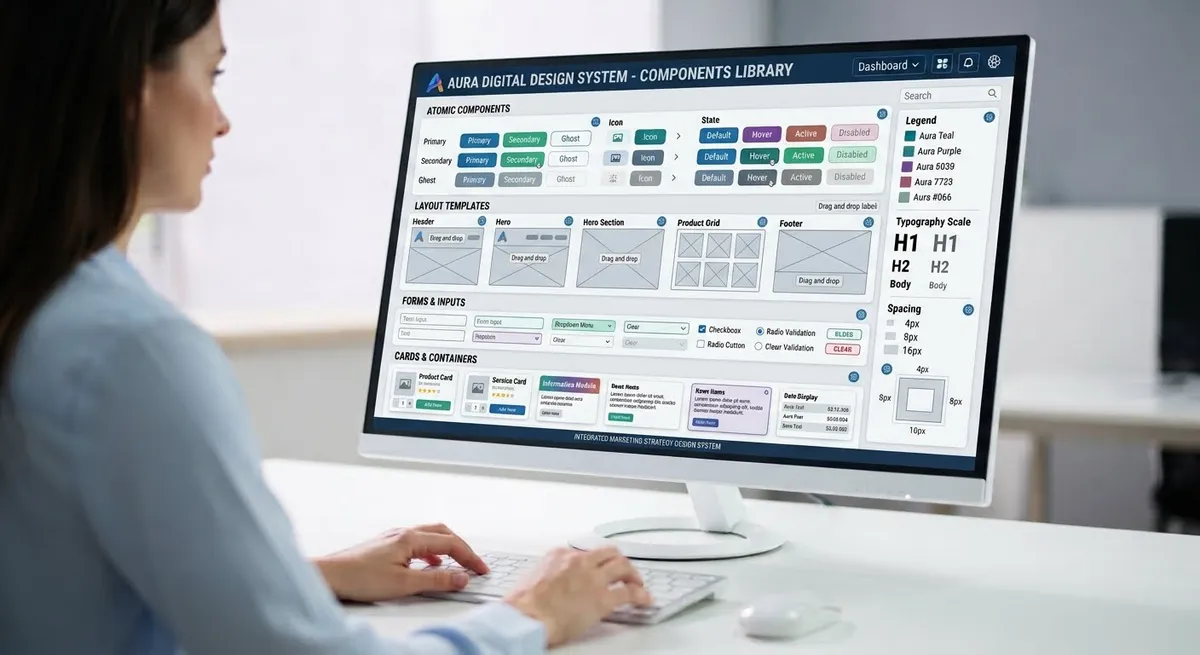
Rapid scaling requires design systems and component libraries that marketing can leverage without constant custom design work. A well-built design system enables marketing to launch new campaigns and pages quickly while maintaining brand consistency.
Work with your design team to document components: button styles, card layouts, form elements, hero sections, testimonial blocks, and more. These building blocks should support common marketing needs, including landing pages, email templates, social assets, and ad creative.
Step 8: Implement Analytics Integration and Tracking Strategy
For digital marketing web design integration to succeed, both teams need access to the same data. Marketing can’t optimize without understanding user behavior on the site; design can’t make informed improvements without conversion data. Unified analytics is non-negotiable.
Set up comprehensive event tracking that captures both user behavior (clicks, scrolls, interactions) and marketing metrics (lead form submissions, button clicks, conversion events). Tools like Google Analytics 4 should be configured to tell a cohesive story that both teams rely on.
Create dashboards that matter to each discipline but ensure they’re sourced from the same data. Marketing dashboard: traffic sources, conversion rates, cost per conversion. Design dashboard: user engagement, bounce rates, task completion rates. They’re different views of the same reality, and that alignment prevents conflicting interpretations.
Step 9: Schedule Regular Alignment Meetings and Communication Rituals
Integration requires ongoing communication, not just one-time collaboration. Establish meeting rhythms that keep teams aligned and accountable to shared objectives.
Weekly tactical standup (15 minutes): Share blockers, dependencies, and quick wins. Monthly strategy review (1 hour): Analyze performance data, adjust tactics, celebrate wins. Quarterly planning session (full day): Review learnings, plan next initiatives, align on priorities for the coming quarter.
Beyond meetings, create communication channels where quick questions get answered. A Slack channel for marketing-design collaboration prevents bottlenecks and keeps momentum going. Document decisions in a shared space so both teams understand the reasoning behind strategic choices.
Step 10: Measure, Iterate, and Continuously Improve Integration
The final step is treating your integration process itself as something to optimize. After three to six months of collaborative work, assess what’s working and what needs adjustment.
Survey both teams: Are communication channels efficient? Do you feel heard in decision-making? Are resources allocated fairly? Are projects delivering expected results? Use this feedback to refine your collaboration model.
When hiring a web design agency or expanding your in-house team, apply lessons learned from your integration work. New team members should join a well-established collaborative culture, not inherit siloed ways of working.
Integration Success Indicators:
- Projects launch on time with fewer revisions
- Conversion rates improve month-over-month
- Time from strategy to execution decreases
- Both teams report satisfaction with collaboration
- Cross-functional dependencies are resolved faster
Real-World Impact: Why Integration Matters
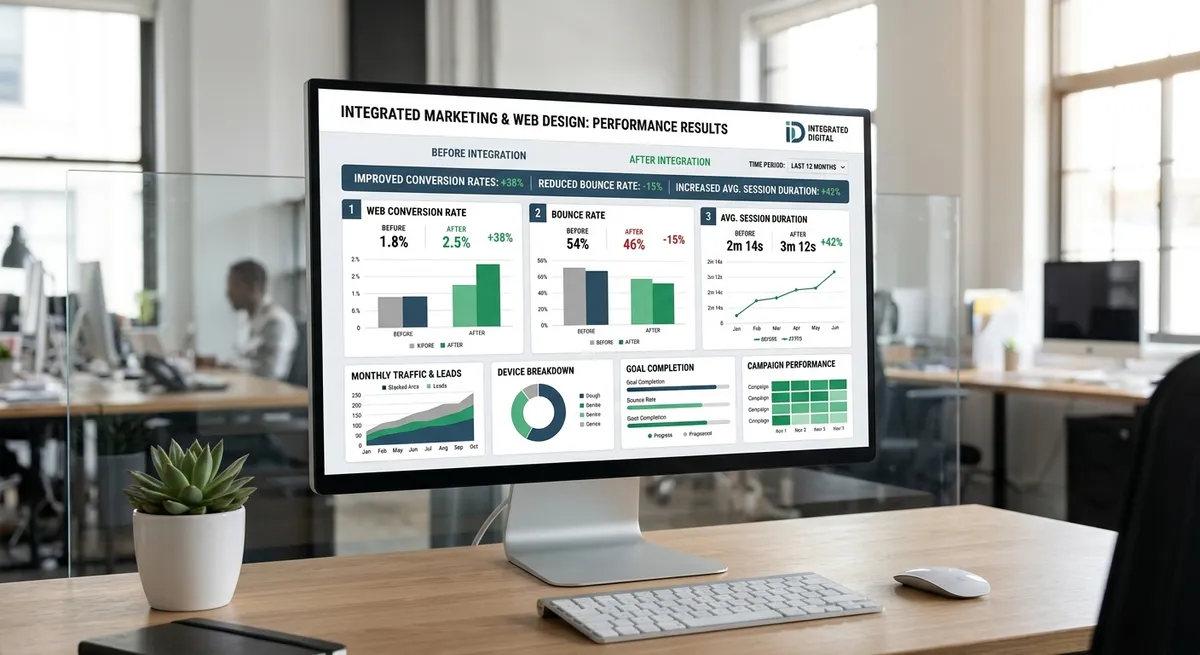
When marketing campaigns are supported by thoughtful web design, businesses can create a smoother user experience and make it easier for visitors to take action. Design decisions informed by user behavior and marketing insights can also help teams identify opportunities to improve engagement and conversions. Actual results depend on the website, audience, and effectiveness of the changes implemented.
The alternative, teams working independently, leaves money on the table. A compelling marketing campaign served by poor website design frustrates visitors and wastes ad spend. Neither outcome is acceptable when resources are scarce and competition is intense.
Getting Started: Your Next Steps
Integration doesn’t require a complete overhaul of how your organization works. Start with step one: unified objectives and KPIs. Get leadership buy-in that marketing and design will operate toward shared goals. From there, each subsequent step builds naturally on the previous one.
If you’re building a new team or restructuring existing departments, guidance on how to hire a web developer should include cultural fit with your marketing team. The best developers and designers aren’t just technically excellent; they’re collaborative and results-oriented.
For established teams struggling with silos, consider bringing in external expertise. An experienced agency can facilitate initial alignment workshops and help establish processes that stick. Hiring a web design agency with strong marketing collaboration experience often accelerates integration more than trying to fix internal silos alone.
Conclusion: Alignment Is Your Competitive Advantage
Digital marketing web design integration separates high-performing organizations from struggling ones. When marketing and design work in concert by sharing objectives, collaborating on strategy, testing together, and measuring shared outcomes, the result is a website that looks great, converts well, and scales with your business.
This 10-step checklist provides a roadmap, but implementation requires commitment and ongoing attention. The teams that prioritize this integration earliest gain a sustainable competitive advantage: faster time-to-market, better conversion performance, and the organizational alignment that attracts top talent.
Ready to transform how your marketing and design teams collaborate? Contact Particular Angles today to discuss how we can help you implement this integration framework and accelerate your growth. Our experience guiding companies through this transition means you’ll avoid common pitfalls and see results faster.
Particular Angles helps businesses align web design and digital marketing to create consistent user experiences and support conversion goals.