




Last updated: October 30, 2026
Modern Web Design Techniques 2026: 10 Trends & Tools
Discover the most important modern web design techniques for 2026. From AI-powered personalization and dark mode to accessibility, immersive experiences, and adaptive typography, these trends are transforming how businesses create engaging, user-friendly websites.
This comprehensive guide explores the ten most impactful web design trends defining 2026, the tools powering them, and how to implement these latest web design techniques to keep your site competitive.
1. AI-Powered Personalization & Dynamic Content
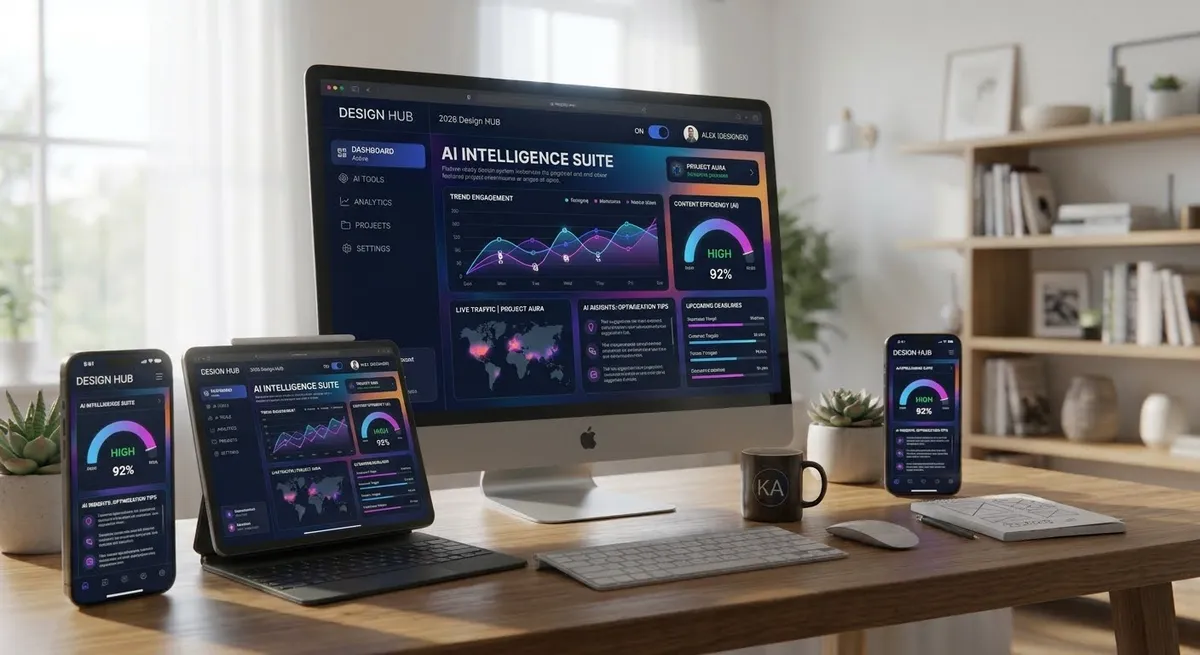
Artificial intelligence is no longer a future concept; it’s reshaping how websites deliver content in 2026. AI-powered personalization is becoming an increasingly important part of modern web design, helping businesses deliver more relevant content and experiences based on user behavior and preferences. AI algorithms analyze visitor behavior in real-time, adjusting layouts, product recommendations, and messaging to match individual user preferences.
The best part? This trend extends beyond e-commerce. SaaS platforms, content publishers, and B2B sites now use AI to dynamically generate headlines, customize CTAs, and even predict which design variations will convert best. B2B SaaS web design trends increasingly emphasize AI-driven personalization to improve user adoption rates and reduce churn.
How to Implement AI Personalization
- Use tools like Dynamic Yield, Optimizely, or Unbounce to segment audiences and display personalized content blocks
- Deploy AI chatbots for intelligent customer support and intent detection
- Leverage predictive analytics to anticipate user needs before they convert
2. Dark Mode as Standard, Not Optional
Dark mode is becoming a popular design option because it offers an alternative viewing experience and can improve visual comfort for some users, depending on their environment and preferences. Many websites now offer dark mode as an optional display setting, allowing users to choose the viewing experience that best suits their preferences.
The latest web design techniques include implementing CSS custom properties and prefers-color-scheme media queries to serve appropriate color palettes automatically.
Technical Implementation
- Use CSS variables for seamless theme switching
- Test contrast ratios to maintain WCAG AA compliance in both modes
- Store user preference in local storage and respect system-level dark mode settings
3. Micro-Interactions & Purposeful Animation
Purposeful micro-interactions can improve the user experience by providing visual feedback, guiding visitors, and making website interactions feel more intuitive. Modern web design now demands micro-interactions: tiny, purposeful animations that provide feedback and guide users through experiences. These aren’t gratuitous motion effects; they’re functional design elements that clarify interactions and reduce friction. A button that responds with subtle scale feedback, a form field that validates with smooth transitions, or a navigation menu that provides haptic-like visual cues. These create the perceived premium quality users expect in 2026.
Purposeful animations can clarify interactions and provide feedback, but they should support user goals rather than distract from them. The key distinction: animations must serve user goals, not just look polished.
Tools & Frameworks for Micro-Interactions
- Framer Motion for React-based interactive experiences
- GSAP for advanced timeline-based animations
- CSS transitions for lightweight, performant effects
4. Voice Interface & Conversational Design
Voice search and voice-activated interfaces have matured significantly. As voice technology becomes more common, websites should consider supporting voice-friendly interactions alongside traditional visual navigation.
This means designing for conversational flows, optimizing for natural language queries, and creating interfaces that work equally well for voice commands as they do for touch. Chatbot interfaces, voice search optimization, and auditory feedback systems are now essential components of web design best practices 2026.
5. Inclusive Design & Accessibility as Core Feature
Accessibility is no longer just a compliance checkbox; it’s a core design principle. SEO mistakes in web design often stem from poor accessibility implementation, which can also affect user experience and legal compliance.
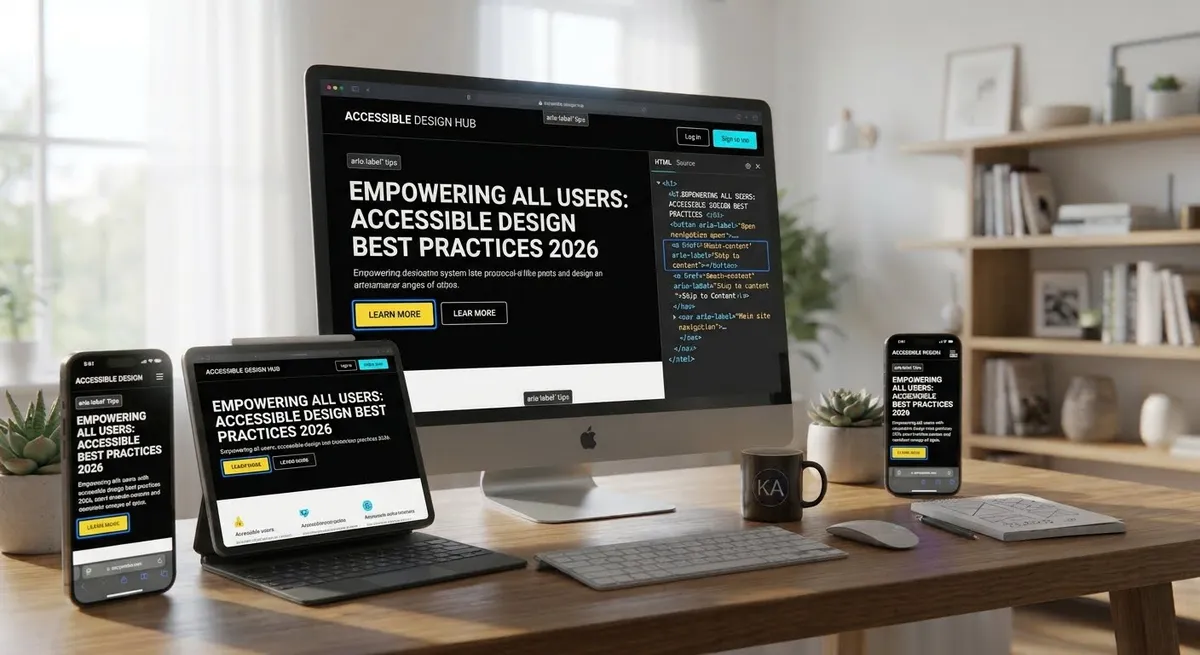
The latest web design techniques prioritize semantic HTML, ARIA labels, keyboard navigation, and color contrast from the design phase, not retrofit. Modern design systems now include accessibility requirements in their component specifications, ensuring every interaction is usable by everyone, regardless of ability.
Key Accessibility Standards for 2026
- WCAG 2.1 Level AA compliance as minimum baseline
- Semantic HTML5 structure
- Complete keyboard navigation support
- Alt text and descriptive labels for all visual elements
6. Core Web Vitals Optimization & Speed-First Design
Google’s Core Web Vitals remain critical ranking factors, and 2026 design trends reflect this reality. Web designers now think in terms of performance constraints from the outset: choosing lighter image formats, reducing JavaScript payload, and optimizing fonts for faster rendering.
Speed isn’t just an SEO concern. Google’s mobile-first indexing means design decisions directly impact search visibility. Designers and developers can use performance testing tools during development to identify potential loading issues before launch.
7. Modular Design Systems & Component-Driven Development
Design systems have matured dramatically. Custom web design vs. templates debate now includes design systems as a hybrid approach, providing flexibility with consistency. Component-based architecture lets teams scale design decisions across multiple products and platforms without rebuilding from scratch.
Tools like Storybook, Figma, and specialized design system platforms enable designers and developers to maintain single sources of truth, ensuring brand consistency while accelerating production timelines. This trend directly supports both custom web design and template-based approaches, bridging the gap between bespoke and scalable solutions.
8. 3D Elements & Immersive Experiences
Three-dimensional design elements are becoming mainstream, not experimental. WebGL and Three.js enable performant 3D experiences directly in browsers without requiring plugins. From subtle 3D product rotations to full immersive environments, 3D design now defines premium web experiences.
Real-world applications span industries: real estate sites offering 3D property tours, fashion brands showcasing products from all angles, and SaaS platforms using 3D data visualizations to communicate complex information. The key challenge: balancing visual impact with performance to maintain those critical Core Web Vitals scores.
9. Progressive Web Apps (PWAs) with Offline-First Architecture
The line between web apps and native applications continues blurring. Progressive Web Apps now account for a significant portion of high-performance digital experiences, offering offline functionality, push notifications, and install-to-home-screen capabilities.
Modern web design trends include building offline-first architectures using service workers and local storage, ensuring users maintain access to critical functionality even without connectivity. This approach particularly benefits mobile users in areas with unreliable connections and improves perceived performance dramatically.
10. Variable Fonts & Adaptive Typography
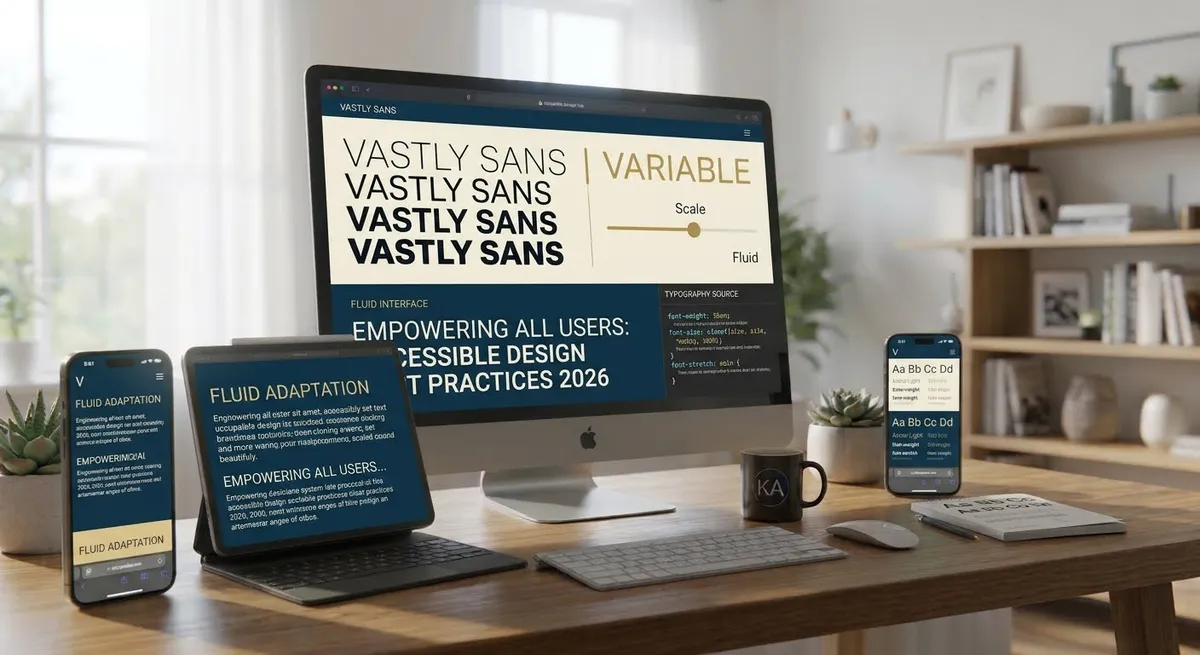
Typography design has evolved beyond selecting static font weights. Variable fonts are single font files containing multiple variations, allowing designers to create responsive typography that adapts to screen size, user preferences, and reading context. This reduces file sizes while expanding creative possibilities.
Adaptive typography also means font sizes, weights, and spacing that scale intelligently across devices. Rather than crude breakpoints forcing font size jumps, modern designs use fluid typography that creates smooth transitions. Tools like Fluid Type Scale Generator make implementation accessible, even for designers without advanced CSS knowledge.
Implementation Time, Difficulty, and Cost of Modern Web Design Techniques
Implementing modern web design techniques requires careful planning, the right tools, and an understanding of your business goals. The time and cost depend on website complexity, available resources, and technical requirements.
Estimated Implementation Time and Difficulty
The estimated implementation time and difficulty for each web design technique are as follows:
- AI-Powered Personalization: 2–6 weeks | Advanced
- Dark Mode: 2–5 days | Easy to Moderate
- Micro-Interactions: 3–7 days | Moderate
- Voice Interfaces: 2–4 weeks | Advanced
- Accessibility Improvements: 1–3 weeks | Moderate
- Core Web Vitals Optimization: 1–2 weeks | Moderate
- Modular Design Systems: 2–6 weeks | Advanced
- 3D Elements: 2–8 weeks | Advanced
- Progressive Web Apps: 2–6 weeks | Advanced
- Variable Fonts: 1–3 days | Easy
These are general planning estimates. Actual implementation time varies depending on the website’s existing structure and development requirements.
Latest Web Design Techniques: Tools and Resources
Businesses can choose between free, open-source, and paid web design tools.
- Figma: Useful for interface design, collaboration, and prototyping.
- WordPress: Provides flexible website management and a wide range of themes and plugins.
- GSAP: Helps developers create advanced animations and interactive experiences.
- Three.js: Supports browser-based 3D graphics and immersive experiences.
- Storybook: Helps development teams build and maintain reusable UI components.
Before selecting a tool, compare its features, pricing, compatibility, learning requirements, and long-term maintenance costs.
Challenges and Considerations
Modern web design techniques also introduce challenges that businesses should consider.
Performance: Heavy animations, large images, and 3D graphics can slow down websites. Optimize media files and test Core Web Vitals regularly.
Privacy and Security: AI personalization may involve collecting visitor information. Use appropriate privacy controls, secure data handling, and transparent consent practices.
Accessibility: Dark mode, animations, and interactive elements should support keyboard navigation, readable contrast, and assistive technologies.
Compatibility: Test websites across different browsers, devices, and screen sizes. Progressive enhancement helps maintain essential functionality when certain features are unsupported.
Maintenance: New design features require ongoing updates, testing, and monitoring to ensure websites remain secure, accessible, and reliable.
Web Design Best Practices 2026: Implementation Guide
Understanding trends is one thing; implementation is another. Conversion rate optimization mistakes often stem from applying trends without considering user context. Here’s how to integrate these trends responsibly:
Start with User Research
Before implementing any trend, understand your audience’s needs. Dark mode might be perfect for a developer tool but potentially problematic for a healthcare information site. AI personalization requires sufficient traffic data to be effective. User research validates whether a trend serves your specific users.
Prioritize Performance & Accessibility
Trends like 3D elements and micro-animations must never compromise Core Web Vitals or accessibility. Test extensively with real users, including those using assistive technologies and slower connections. A beautiful design that fails to load or excludes users has failed, regardless of trendiness.
Build with Design Systems
Rather than treating each page as a one-off design project, establish component-based systems that enforce consistency while allowing flexibility. This approach scales across growth and enables faster iteration as trends evolve.
Conclusion: Future-Proof Your Web Design Strategy
Web design trends 2026 represent a maturation of web capabilities from raw technical possibilities toward thoughtful, user-centered implementations. AI personalization, dark mode standards, micro-interactions, voice interfaces, and accessibility-first design aren’t temporary fads; they’re foundational shifts in how digital experiences are built.
The most successful modern web design balances innovation with fundamentals: speed, accessibility, and user value. Rather than chasing every trend, evaluate which align with your business goals and user expectations. Implementing trends thoughtfully, with support from user research and performance monitoring, positions your site for success through 2026 and beyond.
Ready to elevate your web presence with cutting-edge design and proven conversion strategies? Contact Particular Angles today to explore how these latest web design techniques can transform your digital experience.
Particular Angles specializes in modern web design that balances aesthetic innovation with measurable business results.