




Web Design Case Studies: Examples, Strategies & Lessons From Website Redesigns
A web design case study shows how a website problem was identified, what strategy was used to solve it, and what results followed. Instead of focusing only on how a website looks, effective case studies connect design decisions to measurable business outcomes such as conversions, leads, revenue, engagement, search visibility, or customer satisfaction.
For businesses considering a website redesign, these examples provide a practical way to evaluate what professional web design can achieve. In this article, we’ll examine different web design scenarios from B2B websites and ecommerce product pages to consulting firms and software documentation to explore the challenges, strategies, implementation decisions, and performance metrics that can make a website redesign successful.
 technical SEO, mobile performance, and other factors that can affect search visibility.
6. Implement the Redesign
The solution is then developed around the identified problems and business objectives. Depending on the project, this may include a new visual design, improved navigation, responsive layouts, conversion-focused landing pages, ecommerce improvements, WordPress development, performance optimization, or technical SEO improvements.
7. Compare Before-and-After Performance
When reliable analytics data is available, we compare relevant metrics before and after implementation. These may include conversion rate, lead submissions, ecommerce revenue, engagement, page speed, organic traffic, search visibility, or support requests.
8. Measure the Business Outcome
Finally, we evaluate whether the redesign achieved its intended objective. A successful project isn’t simply one that looks better—it should improve the user experience while contributing to measurable business goals. This outcome-focused approach is also central to how Particular Angles views website improvement. Establishing a clear baseline before a redesign makes it easier to determine whether changes actually improved the areas that matter to the business and where further optimization may be needed.
This methodology helps distinguish a genuine web design case study from a collection of screenshots. By connecting the original problem, strategic decisions, implementation, and measurable outcomes, businesses can better understand the potential value of a professional website redesign.
Website Redesign Before and After: Illustrative Examples
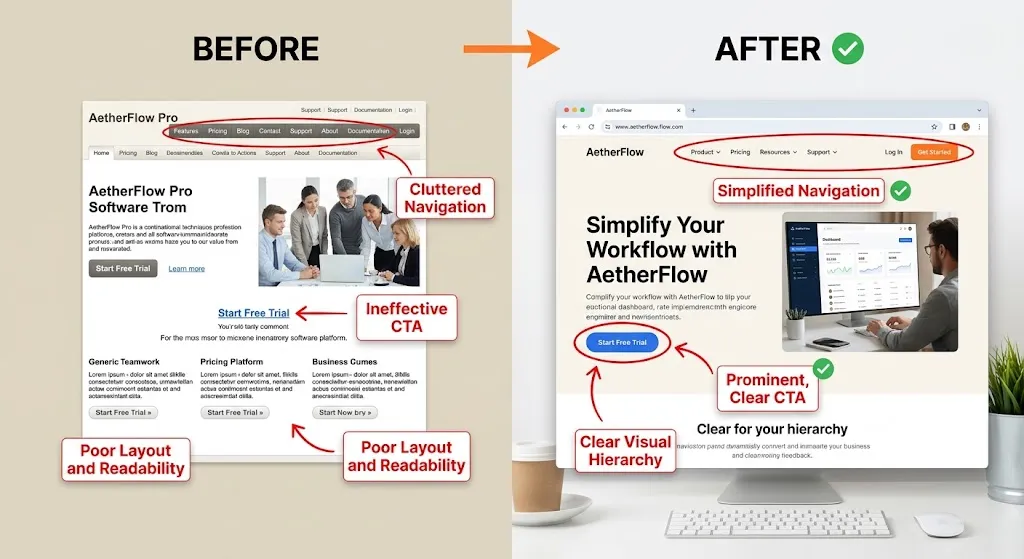
Website redesign before-and-after examples can show how strategic changes to usability, visual hierarchy, content structure, and calls to action can improve the user experience. One common pattern in website redesigns is simplification combined with strategic calls to action. The examples below show how different design strategies can address common website problems.
The following examples are illustrative scenarios based on common website redesign challenges and strategies. They demonstrate how different approaches can address specific UX, conversion, positioning, and information-discovery problems. Where client-specific performance data is confidential or unavailable, the examples focus on strategic lessons rather than unverified results. Actual results vary depending on the business, audience, traffic, baseline performance, and implementation.
Important: The examples below are illustrative scenarios, not claims of verified client results. They demonstrate common website problems, redesign strategies, implementation approaches, and performance metrics. Actual results vary depending on the business, audience, traffic, baseline performance, and implementation.
Example 1: B2B Website Redesign
Illustrative scenario: The following example demonstrates how a typical B2B website redesign might improve messaging, navigation, and conversion paths. It is intended to illustrate the strategy rather than report verified client results.
Challenge: Unclear messaging and complicated navigation
Strategy: Simplify messaging and conversion paths
Implementation: Responsive layouts, reorganized service pages, stronger CTAs
Performance Data: No verified client performance data is available for this illustrative scenario.
Key Takeaway: Clear messaging and navigation can make it easier for visitors to understand a company’s services.
Example 2: Ecommerce Product Page Optimization Scenario
Illustrative scenario: The following example demonstrates how a typical ecommerce redesign might address mobile purchasing friction. It is intended to illustrate the strategy rather than report verified client results.
A common ecommerce redesign scenario involves high mobile cart abandonment despite stronger desktop performance. Product pages may be difficult to use on smaller screens when product images are too small, descriptions require excessive scrolling, or important purchasing actions aren’t persistent.
Scenario at a Glance
Challenge: High mobile cart abandonment and poor mobile product-page experience
Strategy: Adopt a mobile-first product-page design focused on reducing friction
Implementation: Larger product images, sticky add-to-cart button, collapsible specifications, and trust signals
Performance Data: No verified client performance data is available for this illustrative scenario.
The Strategy
The redesign approach included:
- Mobile-first image gallery with zoom capability
- Sticky add-to-cart button fixed to the viewport bottom
- Condensed specifications in collapsible sections
- Trust signals, including reviews and return policy, above the fold
Key Takeaway: The strongest ecommerce redesigns don’t simply make product pages look better. They remove friction from the purchasing process and make important information and actions easier to access.
 Integrating digital marketing with web development often produces better results than either discipline alone.
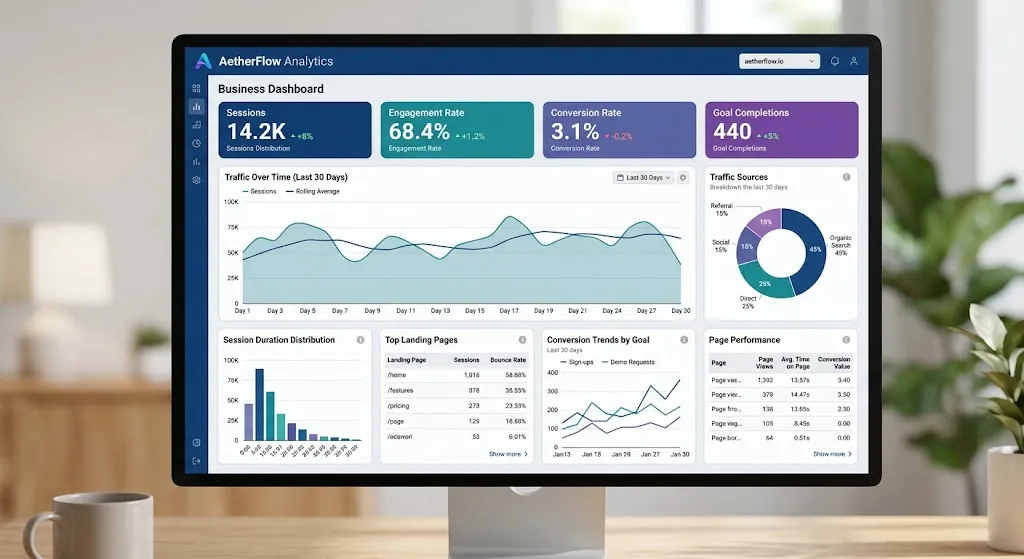
Verify metrics: Were improvements tracked with analytics tools like Google Analytics? Were external factors (seasonal trends, paid advertising increases) accounted for? Credible case studies address these questions directly.
 Contact Particular Angles today to discuss your website’s potential. We’ll review your current website, identify opportunities for improvement, and discuss practical strategies for improving usability, performance, SEO, and conversions.
Particular Angles is a web design and digital strategy agency specializing in custom WordPress development, ecommerce optimization, and B2B digital transformation.