




Last updated: September 25, 2026
The Ultimate Guide to SEO-Friendly Website Design in 2026
In 2026, creating an SEO-friendly website design isn’t optional. It’s essential. Search engines have become increasingly sophisticated, and Google’s algorithms now prioritize websites that combine excellent user experience with technical optimization. If your website doesn’t meet modern SEO standards, you’re losing visibility, traffic, and revenue. This comprehensive guide walks you through the proven strategies that leading agencies implement today to build websites that rank, convert, and grow.
The stakes have never been higher. According to Statista data, over 60% of online discovery starts with search engines, making SEO-optimized design non-negotiable for business growth. Whether you’re launching a new site or auditing an existing one, this guide covers everything you need to know.
Why SEO-Friendly Website Design Matters in 2026
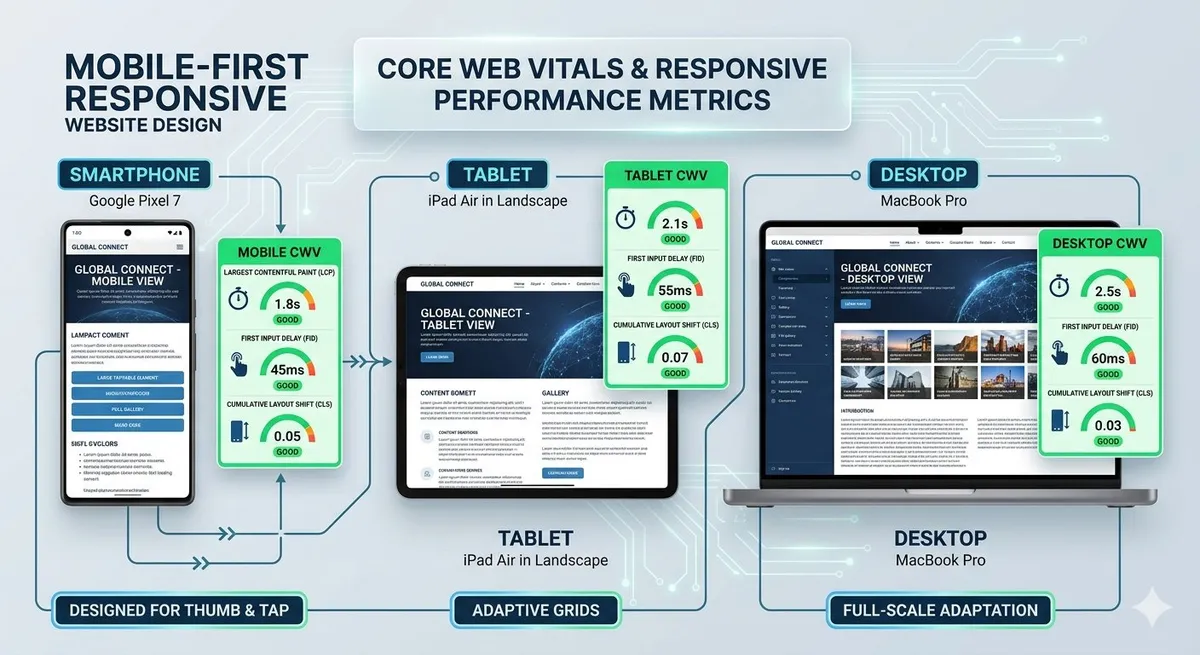
Search engine optimization has evolved dramatically. Five years ago, SEO was primarily a technical and content marketing concern. Today, design for SEO is equally critical. Google’s ranking systems consider factors related to page experience, including page speed, mobile responsiveness, and layout stability, alongside other SEO factors.
This shift means designers and developers must work together from project inception. A beautifully designed website that loads slowly or doesn’t function on mobile devices will never achieve top rankings, regardless of content quality. The modern approach integrates SEO thinking into every design decision.
Real-world results vary by industry, website condition, competition, and the quality of implementation. Businesses that invest in SEO-friendly design can improve technical performance, usability, crawlability, and the overall experience for both search engines and visitors.
Technical SEO Foundations for Modern Website Design
Technical SEO forms the backbone of any effective website design strategy. This encompasses the behind-the-scenes elements that search engines evaluate when crawling and indexing your pages.
Site Structure and Information Architecture
How you organize your website’s pages directly impacts how search engines understand your content hierarchy. A logical, hierarchical structure helps search engines discover, crawl, and understand the relationships between your pages.
- Use a shallow site depth: important content should be reachable within 2–3 clicks from the homepage
- Implement breadcrumb navigation for better crawlability and user experience
- Create a comprehensive XML sitemap that guides search engines to all important pages
- Use descriptive URL structures that include relevant keywords (e.g., /blog/seo-friendly-design-tips rather than /page?id=234)
Schema Markup and Structured Data
Schema markup tells search engines exactly what information appears on your pages. Implementing appropriate structured data can help search engines better understand your content and may make eligible pages available for enhanced search features.
Common schema types for business websites include Article, Organization, Local Business, and Product. Schema.org provides structured data specifications, while Google’s Rich Results Test can help validate supported structured data implementations. Proper schema markup is a hallmark of search engine optimized website design in modern builds.
Site Speed Optimization: The Performance Imperative
Site speed optimization is no longer a nice-to-have. It is an important part of website performance and user experience. Even small improvements in page performance can improve the user experience, particularly on mobile devices and slower connections. Website speed can affect user experience and conversion rates, although the impact varies depending on the website, audience, and performance issues.
Core Web Vitals and User Experience Metrics
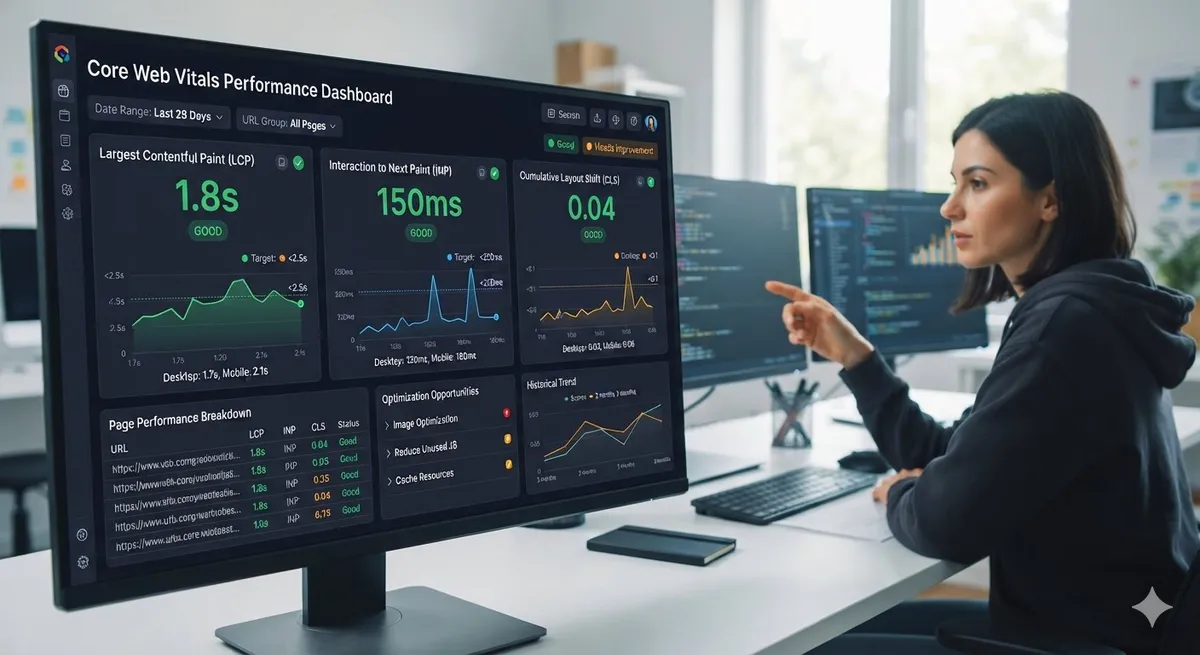
Google’s Core Web Vitals include Largest Contentful Paint (LCP), Interaction to Next Paint (INP), and Cumulative Layout Shift (CLS). These metrics measure important aspects of real-world page experience:
- LCP (Largest Contentful Paint): Measures how quickly the main content becomes visible. Target: ≤2.5 seconds
- INP (Interaction to Next Paint): Measures how quickly a page responds to user interactions. Target: ≤200 milliseconds
- CLS (Cumulative Layout Shift): Measures visual stability as the page loads. Target: ≤0.1
Google uses Core Web Vitals as part of its page experience signals. Good scores can contribute to a better user experience, but they do not guarantee higher search rankings. Monitoring these metrics should be part of your ongoing design and development strategy.
Practical Speed Optimization Techniques
Achieving fast load times requires both design and technical decisions:
- Image optimization: Compress images, use modern formats (WebP), and implement lazy loading for below-fold images
- Code minification: Minimize CSS, JavaScript, and HTML file sizes
- Caching strategies: Implement browser caching and server-side caching
- Content Delivery Network (CDN): Distribute content globally to reduce latency
- Critical rendering path optimization: Defer non-critical JavaScript, inline critical CSS
Digital marketing and web design integration should include regular performance testing and monitoring. Consider tools like Google PageSpeed Insights, GTmetrix, and WebPageTest to track improvements over time.
Mobile-First Design: Non-Negotiable in 2026
Mobile-first design isn’t just about responsive design; it prioritizes the mobile experience as the primary design context. Over 65% of all web traffic now comes from mobile devices, and Google uses the mobile version of a website for indexing.
Responsive Design Principles
Modern websites must function flawlessly across all device sizes. This means designing flexible layouts, scalable typography, and touch-friendly interfaces. Viewport configuration, fluid grids, and flexible images are foundational techniques.
However, mobile-first thinking goes deeper. It means prioritizing essential content and functionality for small screens, then progressively enhancing the experience for larger viewports. This approach naturally improves performance and user focus.
Mobile UX Considerations for SEO
Google evaluates mobile user experience signals closely. Key mobile UX factors that impact SEO include:
- Touch target size (buttons and links should be at least 48×48 pixels)
- Font sizes readable without zooming (minimum 16px for body text)
- Adequate spacing between interactive elements
- Avoidance of intrusive interstitials that block content
- Proper viewport configuration for device scaling
For small business website design impact on revenue, mobile optimization is especially critical. Small business owners often overlook mobile because they primarily use desktop, but their customers don’t. Mobile-optimized sites see higher engagement, longer session durations, and more conversions.
On-Page SEO Design Elements
Beyond technical factors, design choices directly influence on-page SEO effectiveness. How you structure and present content affects both search rankings and user behavior.
Heading Hierarchy and Content Organization
Proper heading structure (H1, H2, H3, etc.) helps search engines understand content relationships and importance. Each page should have a clear primary heading that describes its main topic, with supporting content organized under logical H2 and H3 headings. Subheadings then logically organize supporting content.
This structure helps search engines understand content relevance and topical relationships. Clear heading organization also improves readability and time-on-page metrics, which are user engagement signals.
Visual Hierarchy and Readability
Design elements that improve readability also improve SEO performance. Short paragraphs (3-4 sentences), generous whitespace, and logical visual hierarchy make content easier to scan and consume. Users who can quickly understand and navigate content may spend more time on pages and visit more pages per session, which can support a better overall user experience.
Design best practices for readability include: adequate line-height (1.5-1.8), proper contrast ratios for text, and consistent visual patterns that help users understand content structure.
Content Delivery and Information Architecture
How you present content through design choices impacts its SEO value. Web design trends in 2026 emphasize clarity, modularity, and progressive disclosure of information.
Content Chunking and Scannability
- Descriptive subheadings that preview section content
- Bulleted and numbered lists for quick comprehension
- Highlighted key phrases and bold text for visual emphasis
- Short sections that focus on single topics
- Calls-to-action positioned logically throughout content
Internal Linking Strategy in Design
Design directly influences internal linking effectiveness. Strategic placement of contextual internal links helps users discover related content, establishes relationships between pages, and makes important pages easier for search engines to discover. Custom web design versus template websites can differ in how effectively internal linking is implemented. Custom designs can allow more strategic, organic link placement within the content layout.
Well-designed internal linking also improves user navigation and session depth. When users can easily discover related relevant content, they explore more pages and spend more time on your site.
Performance Monitoring and Continuous Improvement
SEO-friendly design isn’t a one-time project. It requires ongoing monitoring and optimization. Search algorithms evolve, user behavior changes, and technical standards advance.
Key Metrics to Track
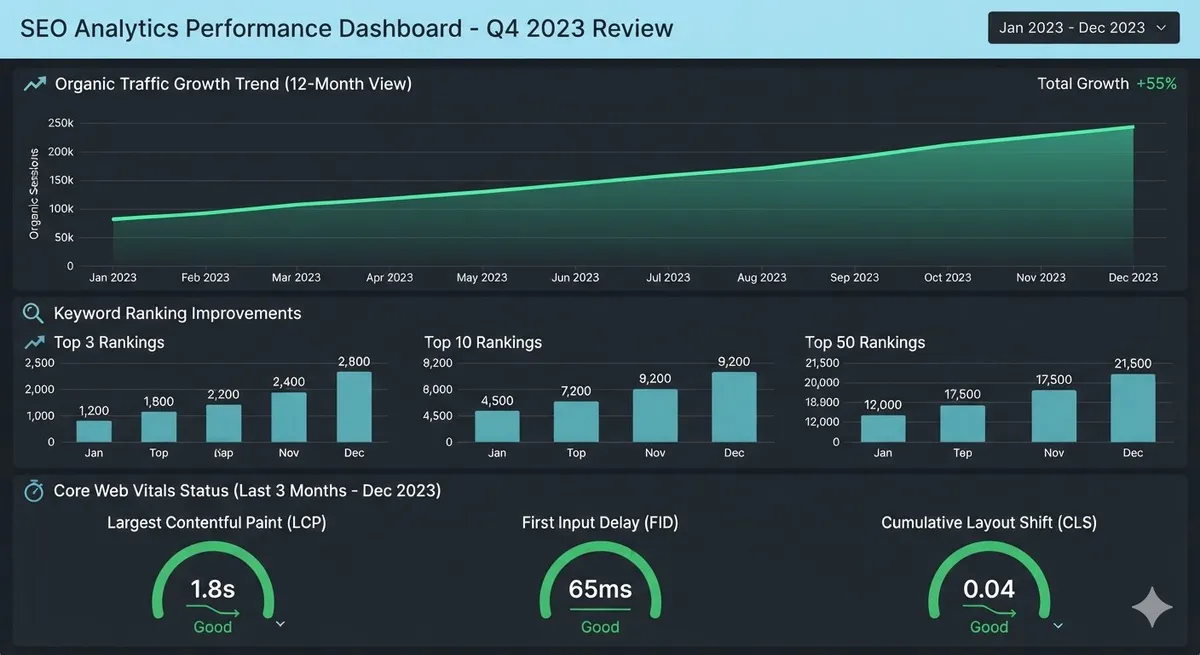
Establish baseline measurements and monitor these metrics monthly:
- Organic search traffic and traffic trends
- Keyword rankings for target terms
- Core Web Vitals scores and page speed metrics
- Bounce rate and average session duration
- Click-through rate (CTR) from search results
- Conversion rate and goal completions
Tools like Google Search Console, Google Analytics 4, and third-party SEO platforms provide the data needed for informed optimization decisions. Regular audits help identify technical issues, content gaps, and opportunities for improvement.
Getting Professional Help with SEO-Friendly Website Design
Building a truly effective SEO-friendly website design requires expertise across multiple domains: UX design, web development, technical SEO, and content strategy. Many businesses benefit from partnering with experienced agencies that understand how to integrate these disciplines effectively.
When evaluating partners, look for agencies with portfolio evidence of successful SEO implementations, understanding of Core Web Vitals and technical SEO, and proven methodologies for aligning design with business goals. When choosing a web design agency, ask specific questions about its SEO approach, performance standards, technical capabilities, and ongoing optimization services.
Conclusion: Your Path to SEO-Friendly Website Design Success
Creating an effective SEO-friendly website design in 2026 means thinking beyond aesthetics. It requires integrating technical SEO, performance optimization, mobile-first principles, and user-centered design into every design decision. Websites that perform well in search and convert visitors effectively are usually the result of strategic planning and technical execution aligned with user needs and search engine requirements.
Whether you’re launching a new website or optimizing an existing one, the principles covered in this guide will help you build a stronger digital foundation. Start by auditing your current site against Core Web Vitals standards, mobile responsiveness, and technical SEO fundamentals. Then prioritize improvements that address your biggest gaps.
Ready to transform your website into an SEO-powered growth engine? Contact Particular Angles today to discuss your website design goals and discover how our team combines design excellence with technical SEO expertise to deliver results that matter.
This guide was written by SEO and web design strategists at Particular Angles with over 15 years of combined experience building high-performing websites for businesses across industries. We specialize in integrating design and technical SEO to deliver measurable results in organic visibility and conversion.
One Response
[…] are technically feasible and perform optimally. Their work also connects closely with broader web design principles, particularly when creating responsive and user-friendly digital experiences. They also […]