




Last updated: September 2, 2026
Web Design Trends for Higher Conversions: What’s Working in 2026
The digital landscape shifts rapidly, and so do the design strategies that drive conversions. If your website hasn’t been updated to reflect current web design trends for higher conversions, you’re likely leaving money on the table. Modern visitors expect seamless experiences, personalized interactions, and clear value propositions—delivered instantly across all devices.
In 2026, the most successful websites aren’t necessarily the flashiest. They’re the ones designed with a singular focus: guiding visitors toward meaningful actions. Whether you’re running an e-commerce store, a service business, or a SaaS platform, understanding what actually works in conversion-focused web design is critical to your bottom line.
This guide explores the most relevant web design trends for higher conversions in 2026, along with practical strategies you can use to improve user experience, reduce friction, and support better website performance.
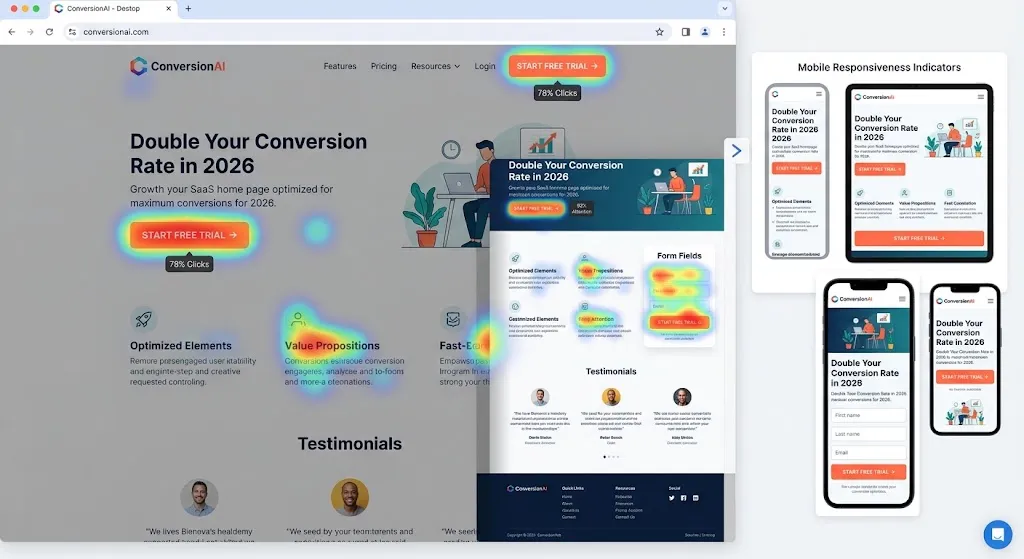
The Shift Toward Conversion-Focused Design in 2026
Traditional web design has always concerned itself with aesthetics and user experience. But 2026 marks a decisive turn: conversion-focused design is no longer a specialty—it’s the baseline expectation. According to HubSpot’s marketing research, businesses increasingly rely on data-driven optimization and conversion-focused strategies to improve website performance. What does this mean for your strategy? Every design decision—from button placement to color choice to page load speed—should serve a conversion objective. The best modern web design practices eliminate friction and create intuitive pathways that guide users naturally toward your desired actions.
This shift reflects a maturation in how businesses understand web design ROI. You’re no longer investing in a website just to have an online presence. You’re investing in a conversion machine that turns strangers into customers.
Why Conversion-Focused Design Matters More Than Ever
In 2026, user attention spans are shorter, competition is fiercer, and mobile traffic dominates most industries. A beautiful website that doesn’t convert is essentially a digital liability. Your own site’s historical data is therefore a more useful benchmark.
Strategic page layout, compelling copy, clear CTAs, and optimized user flows can help reduce bounce rates and encourage visitors to continue through the site.
Top Web Design Trends Driving Higher Conversions Right Now
1. Intelligent Personalization and Dynamic Content
Static websites are becoming relics. In 2026, personalization is becoming an increasingly important part of conversion-focused web design. Advanced conversion-focused web design now incorporates dynamic content that changes based on visitor behavior, location, device type, and browsing history.
When a first-time visitor lands on your site, they see different messaging than a returning customer. An e-commerce shopper sees product recommendations based on browsing history. A B2B prospect sees case studies relevant to their industry. This level of personalization can make the experience more relevant to users and help guide them toward content, products, or actions that match their needs.
Implementation is now more accessible than ever. Tools like Google Analytics 4 combined with basic AI-driven plugins make dynamic personalization feasible for businesses of any size.
2. Micro-Interactions and Behavioral Design
Micro-interactions—small animations, hover effects, and visual feedback—have evolved from nice-to-have flourishes into essential components of conversion-focused design. When done correctly, these interactions guide users, build confidence, and reduce friction in the conversion journey.
A button that changes color when hovered signals click ability. A loading animation that appears when a form is submitted reassures users that their action registered. Scroll-triggered animations highlight important information as users reach it. These seemingly small details compound into measurable conversion lift.
The key is balance: every micro-interaction should serve a purpose. Decorative animations that don’t advance the conversion journey create cognitive load and slow down page performance—both conversion killers.
3. Minimalist Navigation and Clear Information Architecture
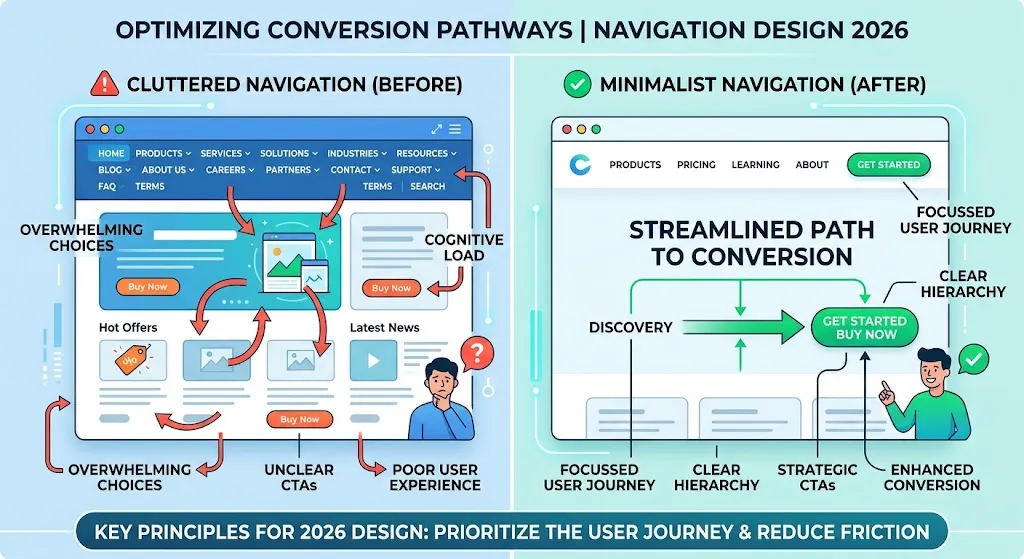
Complexity kills conversions. In 2026, the most effective modern web design embraces radical simplicity in navigation. Keeping primary navigation concise can make it easier for visitors to understand their options and find important pages.
This trend extends beyond the header. Landing pages are getting leaner. Product pages showcase fewer options to reduce decision paralysis. Forms ask for only essential information. Every element serves the primary conversion goal.
Clear information architecture helps visitors find important information quickly, without unnecessary navigation steps. This can reduce friction and make it easier for users to move toward the desired action.
4. AI-Powered Chatbots and Real-Time Support Integration
Chatbots have matured dramatically. Modern conversational AI now handles complex customer inquiries, qualifies leads, and removes friction from the purchase journey—all in real-time. For businesses with frequent customer questions or complex buying journeys, intelligent chat support can reduce friction and help capture conversion opportunities in real time.
The best implementations are seamless: a visitor lands on your site, sees a friendly chat widget, and can instantly get answers to common questions without leaving the page. If they need human help, the bot gracefully hands off to your support team with full context.
This can help reduce repetitive support inquiries while giving prospects faster access to the information they need. Visitors get answers faster, and you capture more sales opportunities before prospects abandon your site.
5. Mobile-First Design With True Optimization (Not Responsive Compromise)
Mobile-first design isn’t new, but 2026 finally sees its full maturation. The distinction now lies between truly optimized mobile experiences and merely responsive designs that adapt to smaller screens.
True mobile optimization means rethinking the entire user experience for small screens: touch-friendly controls with appropriately sized tap targets, thumb-zone navigation, one-column layouts, and mobile-specific CTAs. Forms are stripped to essentials. Images are optimized for fast loading. Every element serves the mobile user’s needs.
Mobile traffic represents a substantial share of web activity, making mobile optimization essential for businesses that depend on mobile visitors.
6. Strategic Use of Video and Rich Media
Video isn’t new, but its conversion impact has reached new heights. In 2026, product videos can improve engagement and conversions, particularly when they demonstrate a product, explain a complex feature, or address purchase objections. The impact varies by product and should be measured through testing.
The trend is toward shorter, highly targeted video content that answers specific questions, demonstrates products, explains complex features, or addresses purchase objections. Live video elements, such as product demonstrations and Q&A sessions, can also create more authentic engagement when appropriate.
UX Design Best Practices That Drive Real Results
Form Optimization and Friction Reduction
UX design best practices in 2026 focus intensely on form optimization because forms are the conversion gatekeepers. Businesses are increasingly using progressive profiling and conditional logic to collect information without overwhelming visitors. Depending on the use case, multi-step forms can also make longer forms easier to complete.
Progressive disclosure shows only relevant form fields based on previous answers. Smart defaults (like pre-selecting the user’s country based on their IP) reduce manual entry. Single-click sign-up options (using Google, Apple, or LinkedIn login) are increasingly common ways to reduce friction.
These approaches can reduce unnecessary friction, but the best form structure should be determined through testing and the information your business actually needs.
Trust Signals and Social Proof Integration
Trust signals are essential components of conversion-focused design in 2026. Security badges, customer testimonials, case study links, certification logos, and live customer activity counters all serve to reduce perceived risk and increase confidence.
The strategic placement of these elements matters significantly. Trust signals appear near CTAs and at critical decision points. Customer review counts and star ratings display prominently on product pages. Reviewing web design case studies can also provide concrete examples of how design decisions connect to measurable business outcomes.
Page Speed and Technical Optimization
Page speed can have a measurable impact on user behavior and conversions. Historical research from companies such as Amazon, Walmart, and other large retailers has demonstrated that latency can affect revenue and conversion performance.
This requires modern technical implementation: image optimization, lazy loading, content delivery networks (CDNs), and efficient code. These technical improvements should also be considered alongside SEO, particularly when website performance, mobile usability, and search visibility are important business goals. Our guide to SEO services for small businesses explains how web design and SEO can work together.
Real-World Implementation: What Conversion-Focused Design Looks Like
Theory is useful, but how do these web design trends for higher conversions translate into actual results? The answer lies in systematic testing and optimization. A/B testing is no longer optional—it’s foundational.
Leading companies test everything: button colors, CTA copy, form field quantity, page layout, image choice, and content length. Small improvements can compound across the conversion journey. For example, improving CTA engagement, reducing form abandonment, and strengthening product-page messaging can collectively help more visitors progress from initial interest to completed conversion. The key is to measure each change and determine which improvements actually affect your site’s conversion goals.
For specific examples of how conversion-focused design performs in real projects, our collection of web design case studies showing real results demonstrates these principles in action across different industries.
How to Build a Conversion-Focused Web Strategy in 2026
A conversion-focused web strategy isn’t a one-time project—it’s an ongoing process of testing, measurement, and optimization. Start with these foundational steps:
- Audit your current site: Identify friction points, measure baseline conversion rates, and establish clear KPIs for improvement.
- Prioritize quick wins: Start with high-impact areas such as CTA clarity, form usability, page messaging, and navigation. Measure changes against key metrics such as CTA clicks, form submissions, leads, and purchases.
- Implement personalization: Start with basic segmentation, such as new versus returning visitors, and gradually introduce more relevant content and experiences as you collect data.
- Optimize mobile ruthlessly: Test your site on actual mobile devices, not just browser simulations. Check navigation, forms, page speed, readability, and CTA usability across different screen sizes.
- Test continuously: Establish a regular testing cadence, such as weekly or bi-weekly A/B tests on high-traffic pages. Focus on one meaningful variable at a time so you can clearly understand what improves performance.
- Measure and iterate: Track conversion metrics consistently and use the results to guide your next design decisions. What works for one audience or page may not work for another, so continuous optimization is essential.
If your team lacks specialized expertise in conversion-focused web design, working with an experienced UI/UX professional can help identify usability issues and create experiences designed to support measurable business goals.
In 2026, web design trends for higher conversions represent the intersection of psychology, technology, and data science. Websites designed with conversion as a central objective are better positioned to turn traffic into meaningful actions than websites that treat design as purely aesthetic.
The businesses winning online right now understand that every pixel, every word, and every interaction should serve a conversion purpose. They embrace modern web design principles, test relentlessly, and adapt quickly to emerging trends.
If your website isn’t delivering the conversions you need, the solution isn’t always a complete redesign—it may be a strategic refresh focused on usability, performance, messaging, and proven conversion principles. Understanding the investment involved can also help you determine the right scope for your project. See our 2026 web design pricing guide for an overview of website costs and project considerations.
Ready to turn your website into a stronger conversion channel? Contact Particular Angles today to discuss your goals and how modern conversion-focused design can support measurable results.
About the author: This content was created by the Particular Angles team, a web design and development firm specializing in conversion-optimized websites for B2B and SaaS companies. Our approach combines data-driven design principles, user research, and continuous optimization to deliver measurable business results. With over a decade of experience building high-converting websites across diverse industries, we bring evidence-based insights to every project.